Hindu Coloring Books for Bal Vihar and Temple Classes
Bal Vihar and temple classes often need activities that are calm, flexible, and easy to use with children of different ages. Hindu coloring books for kids can support storytelling, festival lessons, quiet time, and group activities without requiring complex materials or lengthy preparation.
A deity-themed coloring book also gives children something meaningful to take home and continue with their families. One child may color for ten minutes; another may spend longer adding patterns, backgrounds, and details. That flexibility makes coloring especially useful for groups with varied ages, attention spans, and confidence levels.
For teachers, volunteers, and parents leading Hindu school activities, the goal is not to make every page into a formal lesson. It is to create a welcoming experience where children can listen, imagine, ask questions, and enjoy culture through art.
Why Coloring Works in Bal Vihar and Temple Classes
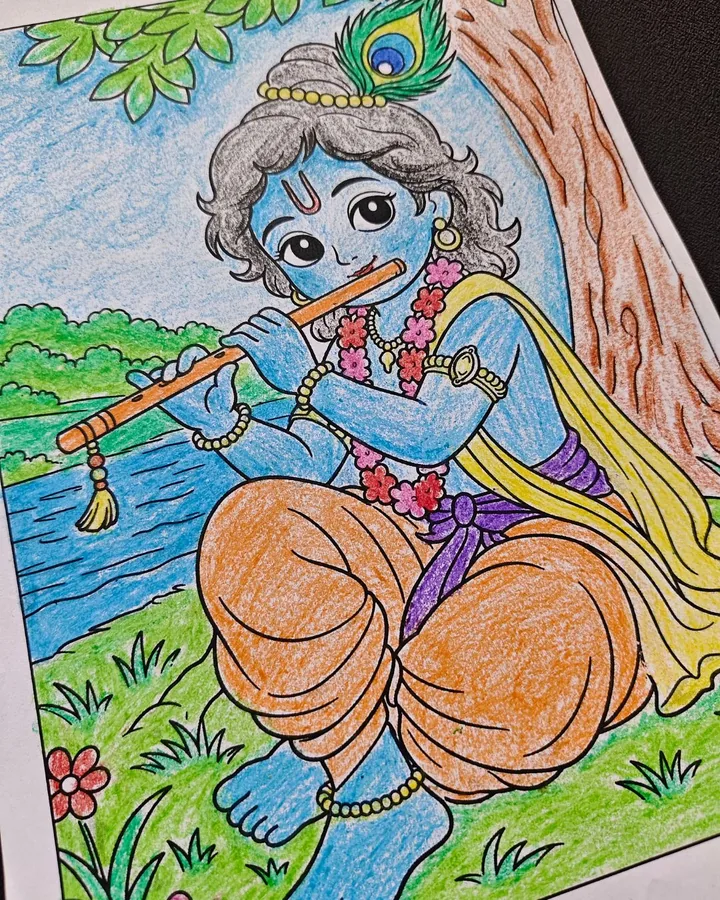
Coloring works well in group settings because it is simple to introduce and easy to adapt. Children do not need advanced drawing skills, special equipment, or long instructions before they can begin.
A coloring activity can also support several lesson goals at once. It gives children a quiet task, creates a visual connection to the day's story or festival, and provides an easy way for teachers to start conversations.
It supports mixed-age groups
Temple classes often include children who are at very different stages. A five-year-old may enjoy choosing bright crayon colors, while a ten-year-old may want to add detailed patterns or create a story around the picture.
Hindu coloring books for kids allow each child to participate at their own level. Younger children can use bold crayons and simple choices. Older children can add shading, backgrounds, captions, or written reflections.
It creates a calm transition activity
Coloring can help children settle into class while others arrive. Place books and crayons on tables at the beginning of the session, then invite children to choose a page quietly.
It also works well after an energetic activity such as singing, movement, or a group game. Coloring gives children a chance to reset before story time, discussion, or closing prayers.
It helps children remember a lesson
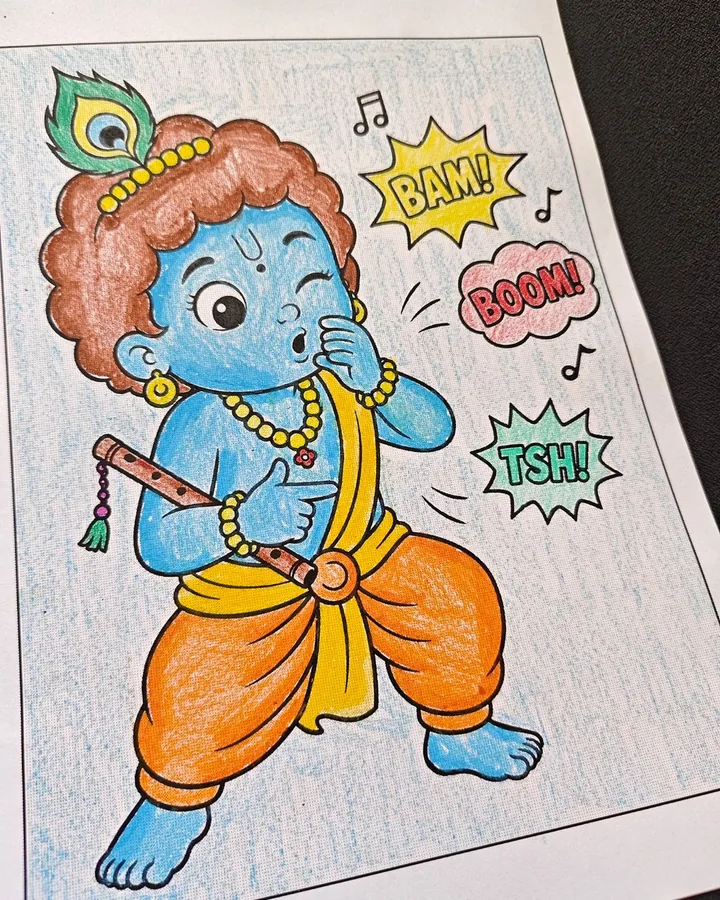
Children often remember an image long after they forget a detailed explanation. A Krishna coloring page may help them remember a discussion about music, friendship, or Janmashtami. A Ganesha page can connect to learning and new beginnings. A Hanuman page may support a conversation about courage and helping others.
The page does not need to explain everything. It simply gives children a visual memory connected to the story, value, or festival.
It gives families a natural follow-up at home
A completed page can travel home with the child. Parents may place it on the refrigerator, ask about the story, or continue the activity together later.
That makes coloring one of the most useful Bal Vihar activities: it creates a bridge between temple class and family life without assigning complicated homework.
Choosing Pages for Different Age Groups
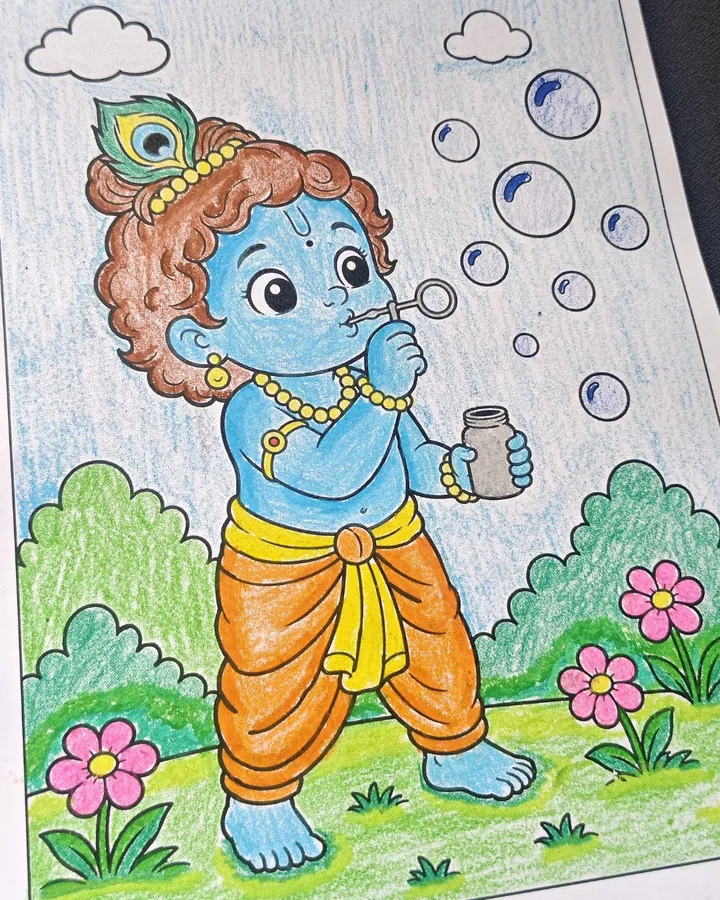
The best temple class activities are age-appropriate, easy to explain, and flexible enough for children to make their own choices.
Ages 4-6: Keep it simple and visual
Young children usually do best with large shapes, bold outlines, and familiar images. Choose pages that feature a single character or a clear festival symbol rather than crowded scenes with many details.
- Ganesha with flowers or modaks
- Little Krishna with a flute or peacock feather
- A diya or rangoli-inspired page
- A lotus, cow, peacock, or temple bell
- Simple Hanuman or Rama illustrations
Use chunky crayons, washable markers, or triangular colored pencils that are easier for small hands to hold. At this age, the goal is enjoyment, confidence, and curiosity.
Ages 7-9: Add stories and simple prompts
Children in this age group can handle more detailed pages and may enjoy connecting pictures to a short story.
- What is happening in this picture?
- What color makes this scene feel joyful?
- How can we show kindness this week?
- What would you add to this festival scene?
This age group also enjoys working in pairs. One child can color while another describes what they see, then they can switch.
Ages 10-12: Invite reflection and creativity
Older children may enjoy more intricate Hindu coloring pages, colored pencils, gel pens, or a choice between several themes.
- Add a background to the page
- Write a short caption or story
- Create a border using traditional motifs
- Design a festival greeting card
- Choose a value connected to the image
Older children may appreciate being treated as helpers, too. Invite them to assist younger students with supplies, explain instructions, or help display finished artwork.
Krishna, Ganesha, Hanuman, and Rama Activity Ideas
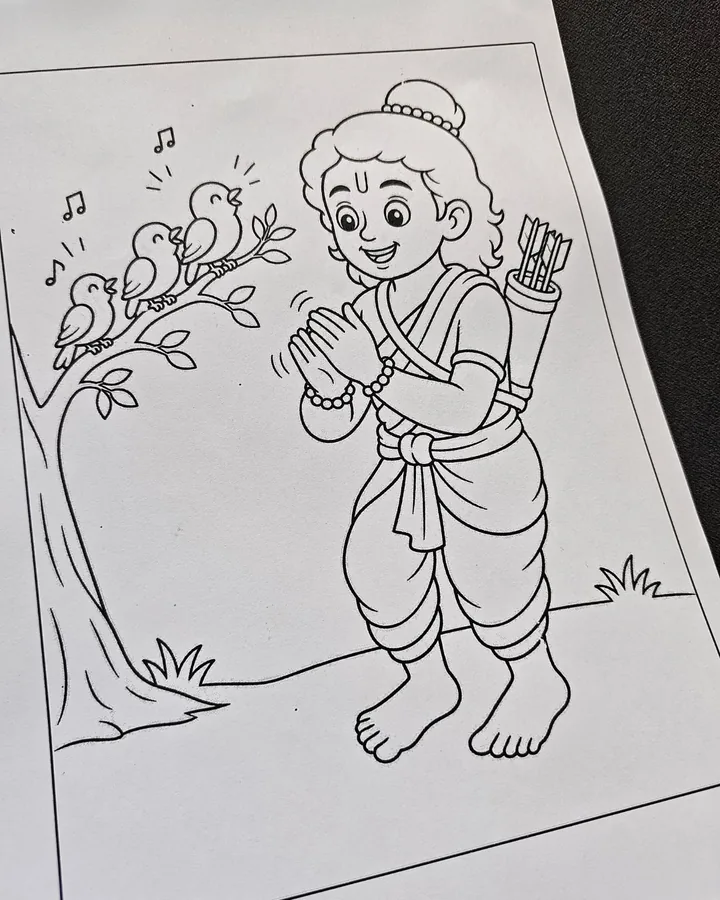
A deity-themed coloring book can be matched to the class topic, the season, or the values you want children to explore.
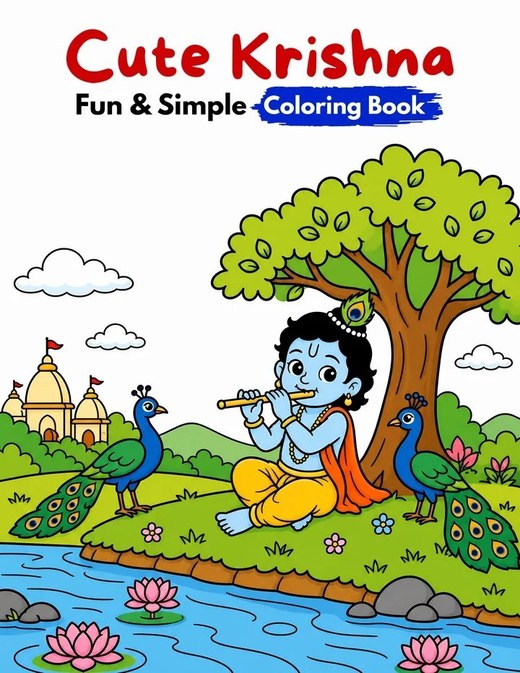 Krishna Coloring Book
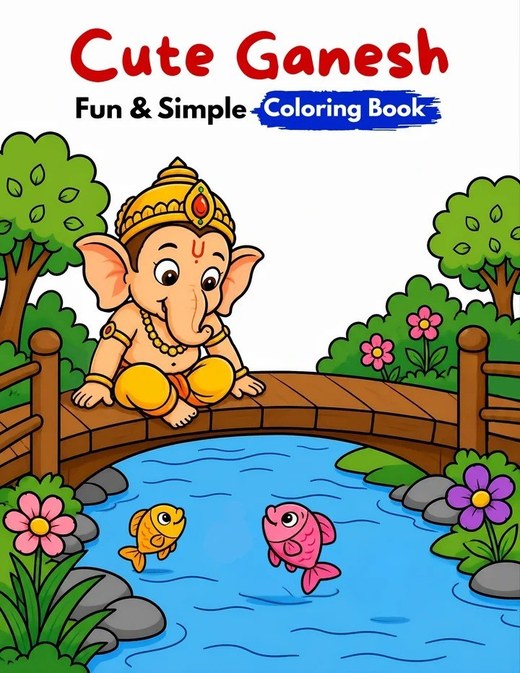 Ganesh Coloring Book
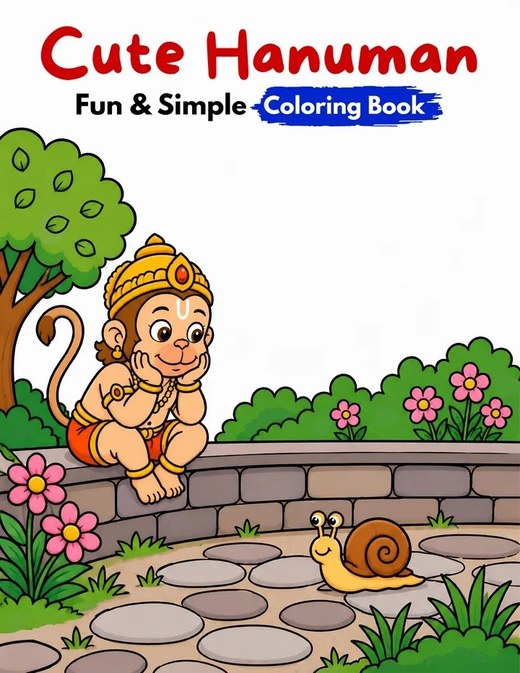 Hanuman Coloring Book
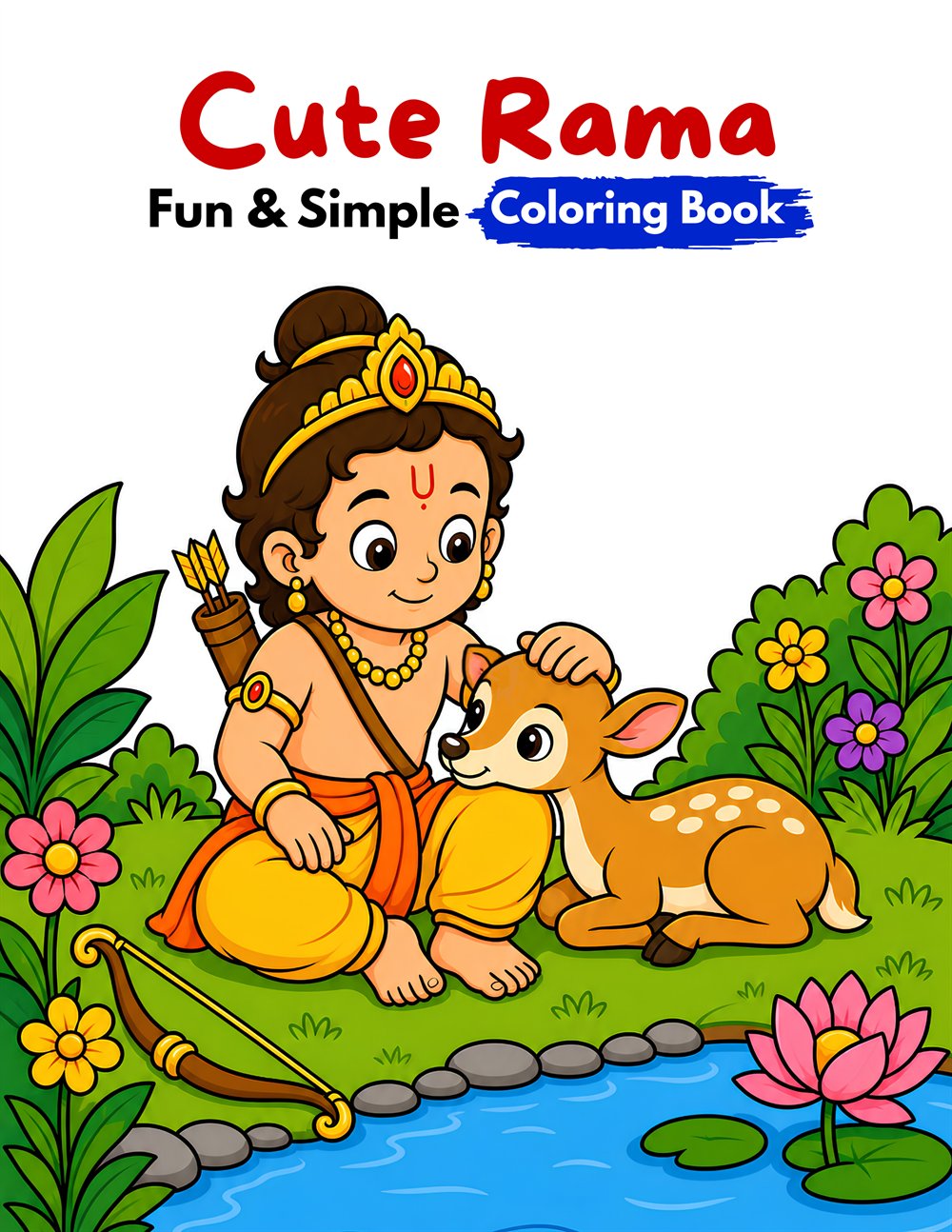 Rama Coloring Book
Krishna activities for joy, friendship, and creativity
Krishna-themed pages can include flutes, peacock feathers, cows, butter pots, flowers, and playful scenes. These are especially useful around Janmashtami or when discussing music, friendship, and joyful devotion.
Tell a short Little Krishna story, invite children to color a Krishna page, then ask them to add three things that make the scene feel joyful. For younger children, ask what music Krishna might be playing. For older children, ask how music can bring people together.
Ganesha activities for learning and new beginnings
Ganesha pages are often ideal for younger groups because the imagery is familiar and easy to recognize. They work well at the beginning of a school year, during Ganesh Chaturthi, or whenever a class is starting a new topic.
Try a "New Things I Can Learn" activity: give each child a Ganesha coloring page, ask them to color quietly, then invite them to draw or write one thing they would like to learn.
Hanuman activities for courage and service
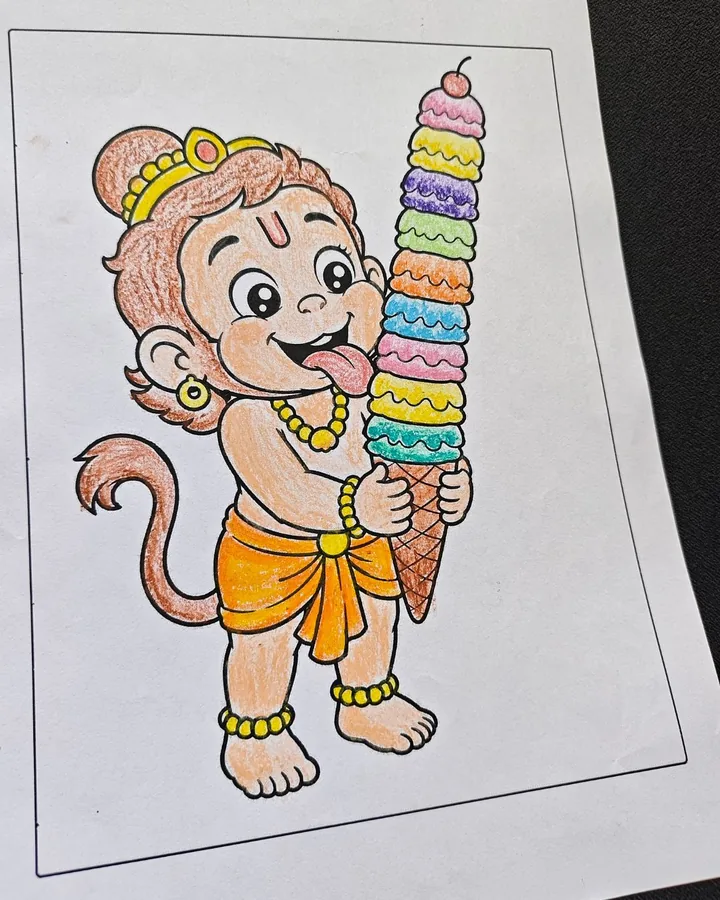
Hanuman pages can support lessons on courage, loyalty, helpfulness, and doing your best for others.
Share a short, age-appropriate story about Hanuman helping Lord Rama. Then ask children to write or draw one helpful action they can do at home, at school, or in their community.
Rama activities for storytelling and values
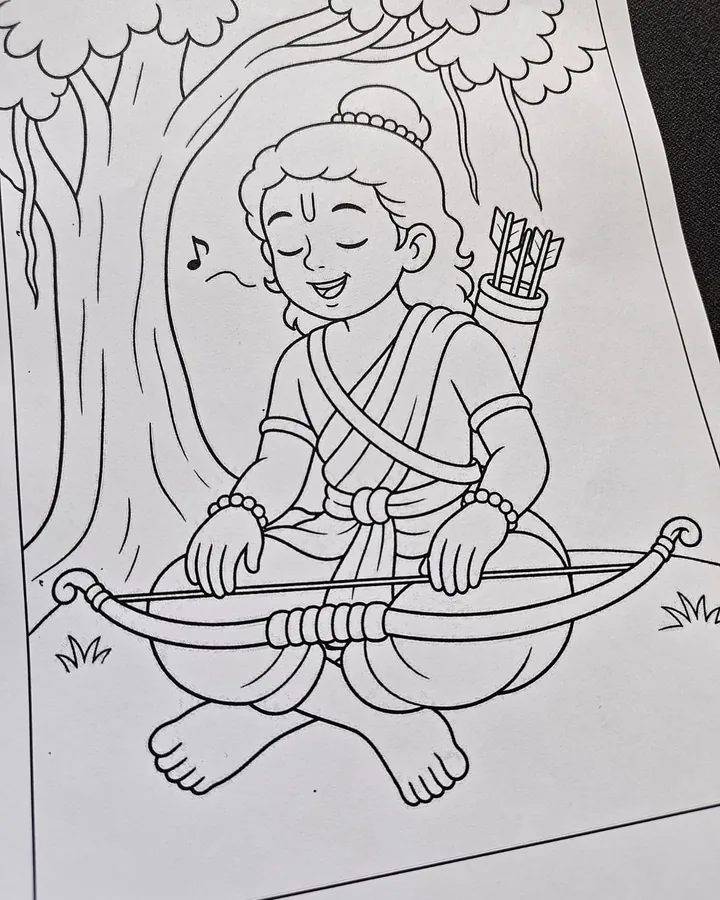
Lord Rama coloring pages can be useful for Rama Navami, Diwali, or lessons connected to the Ramayana. Focus on values children can understand: kindness, courage, family, friendship, and keeping promises.
Tell one short story moment, invite children to color, and ask one question: "What is one kind choice you can make this week?" Children can write, draw, or share their answer aloud.
Using Coloring With Stories and Discussions
Coloring is most effective when it supports the lesson rather than filling time without purpose. A simple three-part structure works well: share a short story, let children create, then close with one reflection question.
Use one central idea
Choose only one value or theme for each session. Too many ideas can overwhelm younger children.
- Krishna and joy
- Ganesha and learning
- Hanuman and helping others
- Rama and making kind choices
- Diwali and light
- Janmashtami and celebration
Ask open-ended questions
Good questions do not have one correct answer. They invite children to think, imagine, and share.
- What do you notice first in this picture?
- Which part was most fun to color?
- What would you add to this scene?
- What story does this page remind you of?
- What is one value you noticed today?
For shy children, let them point to their artwork or show it instead of speaking.
Keep the tone respectful and joyful
Use proper names such as Lord Krishna, Lord Ganesha, Hanuman Ji, and Lord Rama. Encourage children to care for their completed work by placing it in folders, taking it home, or displaying it thoughtfully.
How to Plan a 30-Minute Coloring Session
A 30-minute session can be enough for a meaningful temple class activity. It is long enough to include a story and conversation, but short enough to hold younger children's attention.
0-5 minutes: Welcome and introduce the theme
Gather children and introduce the day's focus in one or two sentences. For example: "Today we are learning about Hanuman Ji and how he helped others with courage and devotion."
5-10 minutes: Share a short story
Tell an age-appropriate story or explain a festival connection. Keep it focused on one clear idea.
10-23 minutes: Coloring time
Hand out supplies and let children color independently or in small groups. Walk around the room, encourage children, and ask gentle questions.
- I like the colors you chose.
- Tell me about this part of your picture.
- What would you like to add next?
23-28 minutes: Share and reflect
Invite volunteers to show their page or share one thing they noticed. Keep participation optional, especially for shy children.
28-30 minutes: Closing and take-home reminder
Ask children to place their work in a folder or take it home carefully. Give parents a short takeaway prompt at pickup, such as: "Ask your child about the value we discussed today."
Hindu Coloring Book Gift Ideas for Students
A Hindu coloring book can also work as a thoughtful take-home gift, attendance reward, festival activity pack, or end-of-term thank-you for students.
Festival activity packs
For Janmashtami, pair a Krishna coloring book with crayons and a small peacock-feather craft. For Ganesh Chaturthi, add a Ganesha coloring book, colored pencils, and a card about learning and new beginnings.
For Rama Navami or Diwali, choose a Rama-themed book and include a small folder for artwork. For Hanuman Jayanti, create a Hanuman activity bundle with crayons and a simple "Helping Hands" prompt.
New-student welcome gifts
A coloring book can help a new child feel included in a Bal Vihar or temple class. Add a welcome note, a small crayon pack, and a class schedule.
End-of-year or volunteer appreciation gifts
Teachers can use Hindu coloring books as small end-of-year gifts for students or as part of a thank-you package for young volunteers. Add a note that thanks children for bringing creativity, kindness, and curiosity to class.
FAQs
Are Hindu coloring books suitable for Bal Vihar classes?
Yes. Hindu coloring books for kids work well in Bal Vihar classes because they are low-prep, adaptable for different ages, and easy to connect to stories, values, and festivals.
What are easy temple class activities for mixed-age groups?
Coloring, story prompts, deity-and-symbol matching games, festival crafts, simple music activities, and group discussions all work well. Choose activities that allow younger children to participate visually while older children can add writing or reflection.
How many coloring pages should each child complete?
One page is usually enough for a 30-minute session. Younger children may finish quickly, while older children may prefer to take a partially completed page home.
How can teachers make coloring educational without making it boring?
Pair the page with one short story and one simple question. Focus on curiosity and creativity rather than memorizing facts. Let children share their own observations and ideas.
Can children take deity-themed coloring pages home?
Yes. Encourage children to carry finished pages home in a folder or paper sleeve. Parents can display the artwork, ask about the class theme, or continue the conversation together.
What should be included in a temple-class coloring kit?
Include coloring books or printed pages, crayons or colored pencils, sharpeners, blank paper, folders, name labels, and a simple take-home prompt for parents.
Make Every Class More Creative and Connected
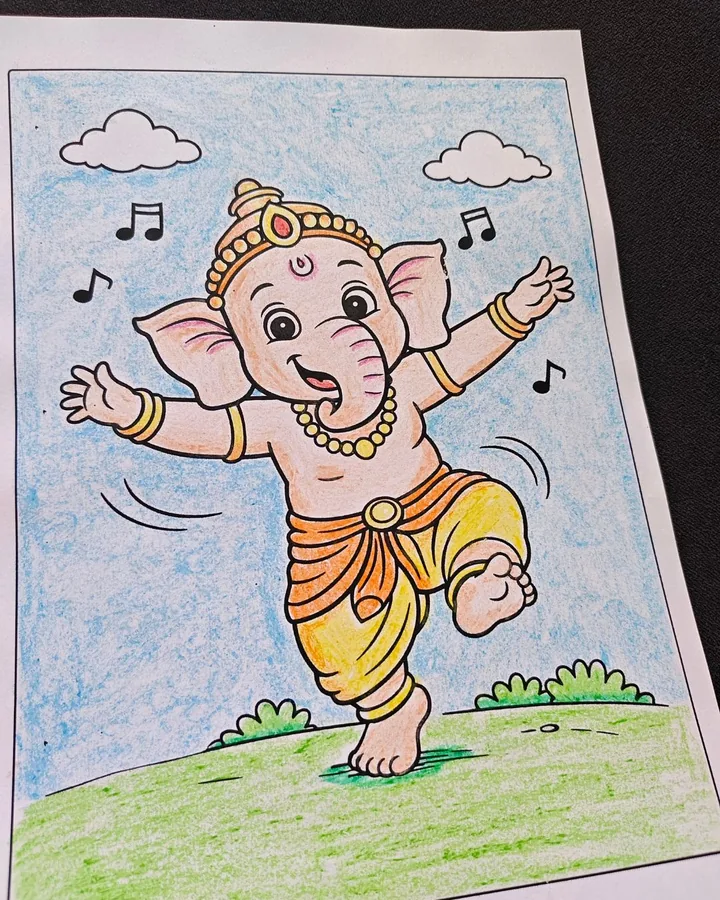
Hindu coloring books for kids give Bal Vihar teachers, temple volunteers, and cultural-school leaders an easy way to combine creativity with meaningful learning.
A simple page can support a story, bring a festival lesson to life, help children settle into class, and create a take-home conversation for families. Start with one theme, one story, and one thoughtful question, then let children's creativity lead the rest.