Which Hindu Coloring Book Is Right for Your Child?
Every child connects with Hindu stories in a different way. Some enjoy Little Krishna's playful world, while others love Hanuman's courage, Ganesha's gentle wisdom, or Lord Rama's inspiring journey.
This guide helps parents, grandparents, and teachers choose a Hindu coloring book for kids based on a child's age, favorite deity, festival, and learning style. Whether you are choosing a screen-free activity for home, a thoughtful classroom resource, or one of many meaningful Hindu kids gifts, the right book can turn coloring time into a joyful cultural connection.
At a Glance: Which Zippy Colorpop Book Should You Choose?
| Book | Deity or theme | Best for | Age range | Ideal occasion |
|---|---|---|---|---|
| Krishna Coloring Book | Little Krishna, devotion, playfulness | Children drawn to music, stories, animals, and gentle imaginative play | 4-10 | Janmashtami activities, birthdays, quiet weekends |
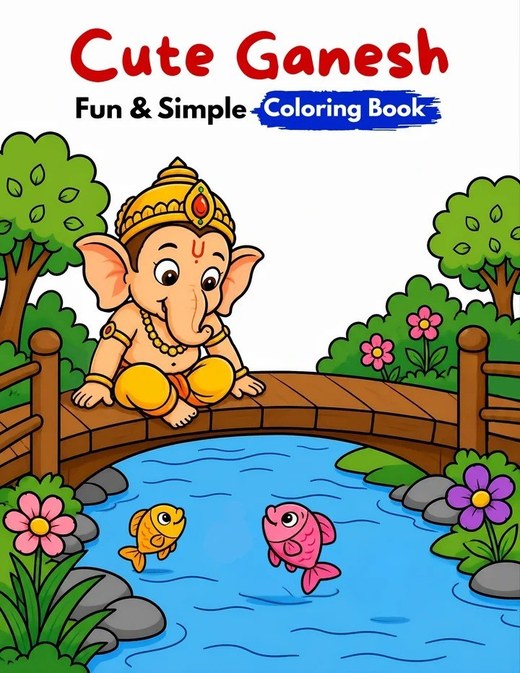
| Ganesha Coloring Book | Lord Ganesha, wisdom, new beginnings | Younger children and first-time Hindu coloring activities | 4-8 | Ganesh Chaturthi, school projects, return gifts |
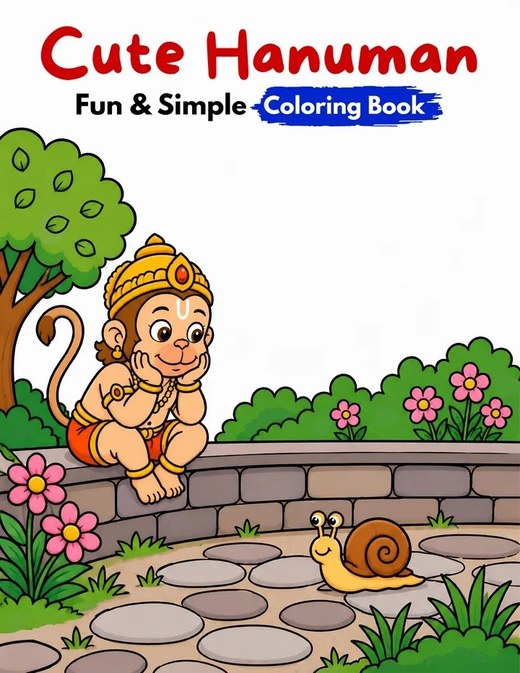
| Hanuman Coloring Book | Hanuman, courage, loyalty, strength | Energetic children who enjoy brave characters and adventure | 5-10 | Hanuman Jayanti, story time, travel activities |
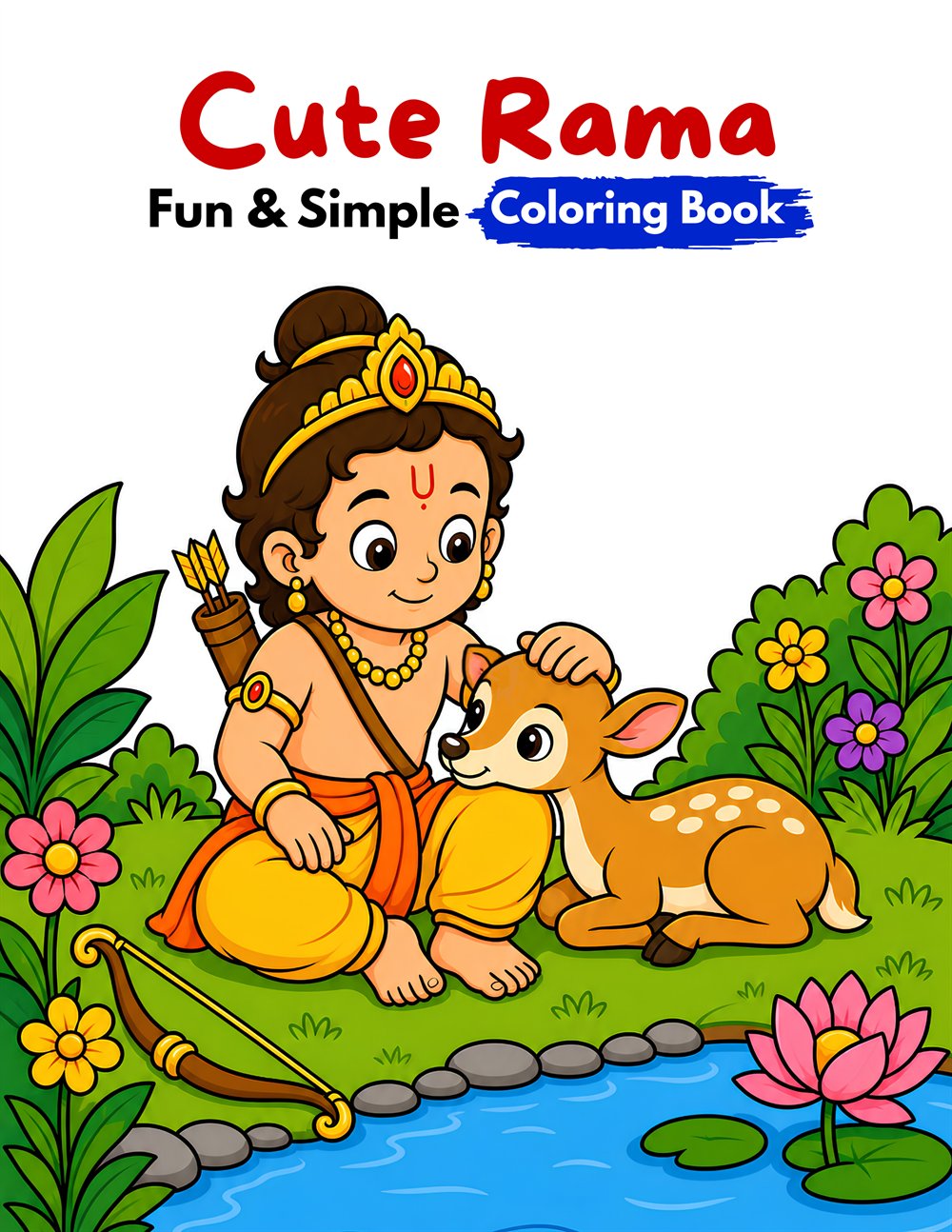
| Rama Coloring Book | Lord Rama and Ramayana-inspired scenes | Children who enjoy following a story and learning through characters | 6-12 | Rama Navami, Diwali activities, family reading time |
| Hindu Gods Coloring Book | Multiple Hindu gods and goddesses | Families seeking variety or children still exploring favorite deities | 5-12 | Festivals, gifts, sibling activities, classrooms |
Start with the Book Your Child Will Want to Open
A good Hindu coloring book for kids should feel personal. Instead of choosing only by cover design, start with the child's curiosity. Which stories do they ask about? Which deity do they recognize at home, at the temple, or during family celebrations?
A book connected to something familiar is more likely to be opened, colored, and remembered. The goal is not to turn coloring into a lesson with rules. It is to make cultural learning relaxed, creative, and age-appropriate.
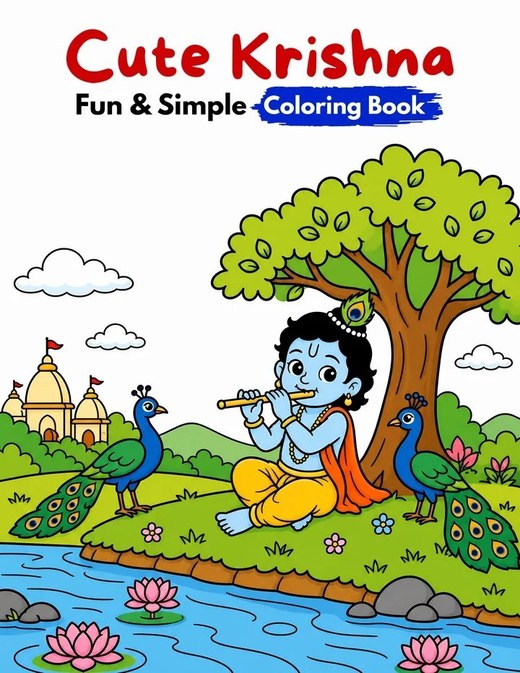 Krishna Coloring Book
 Ganesha Coloring Book
 Hanuman Coloring Book
 Rama Coloring Book
How to Choose a Hindu Coloring Book for Kids
Start with a favorite deity or story
A child who loves playful characters may connect with Krishna. A child who likes heroic stories may be drawn to Hanuman or Rama. For younger children, Ganesha can be a welcoming introduction because the imagery is easy to recognize and naturally sparks conversation.
Match the book to coloring confidence
For ages four to six, look for bold outlines and simple illustrations that do not feel overwhelming. Children ages seven to nine may enjoy more scenes, character details, and short storytelling prompts. Older children can appreciate layered scenes, more controlled coloring, and opportunities to ask questions about the characters and stories.
Think about the moment you are buying for
A Hindu coloring book can be more than a rainy-day activity. It can be part of a Janmashtami basket, a Ganesh Chaturthi return gift, a Diwali family activity, or a thoughtful birthday present. It also works beautifully as a small, meaningful addition to a child's puja or festival routine.
Best for Children Who Love Krishna
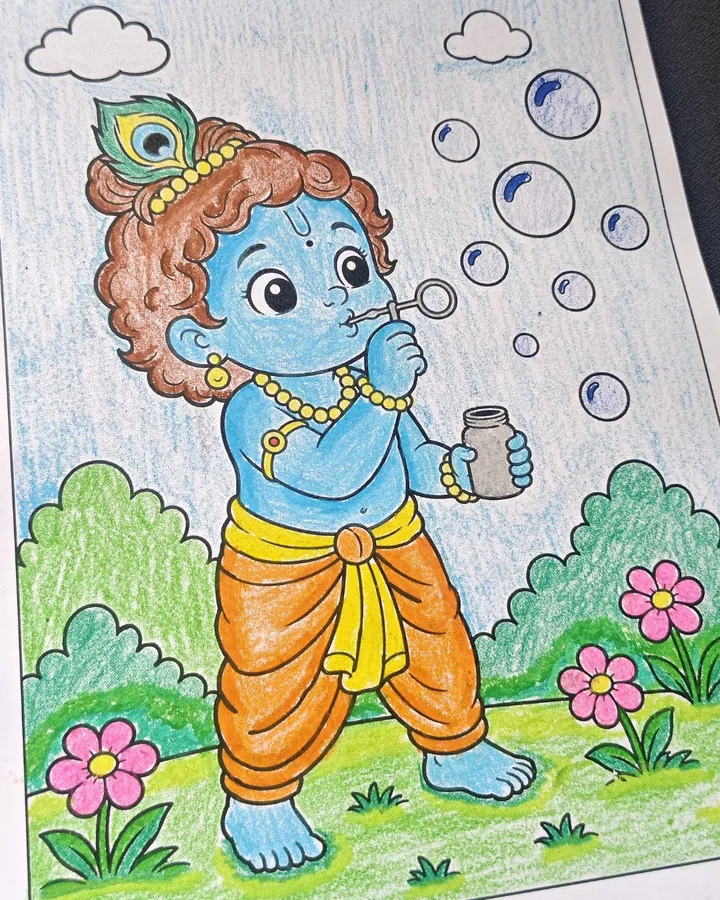
Choose a Krishna coloring book for children who are naturally curious, playful, and drawn to joyful storytelling. Krishna-themed activities can feel especially engaging for kids who enjoy music, animals, friendship, celebrations, and imaginative scenes.
This is a lovely choice for a child who already recognizes Krishna from family stories, bhajans, temple visits, or Janmashtami celebrations. It can also be a gentle first step for a child who is beginning to explore Hindu traditions through art rather than long reading sessions.
For younger children, sit alongside them and invite simple conversation: "What colors would Krishna's outfit look beautiful in?" For older children, connect a finished page to a short family story or a related children's book.
Best for Children Who Love Ganesha
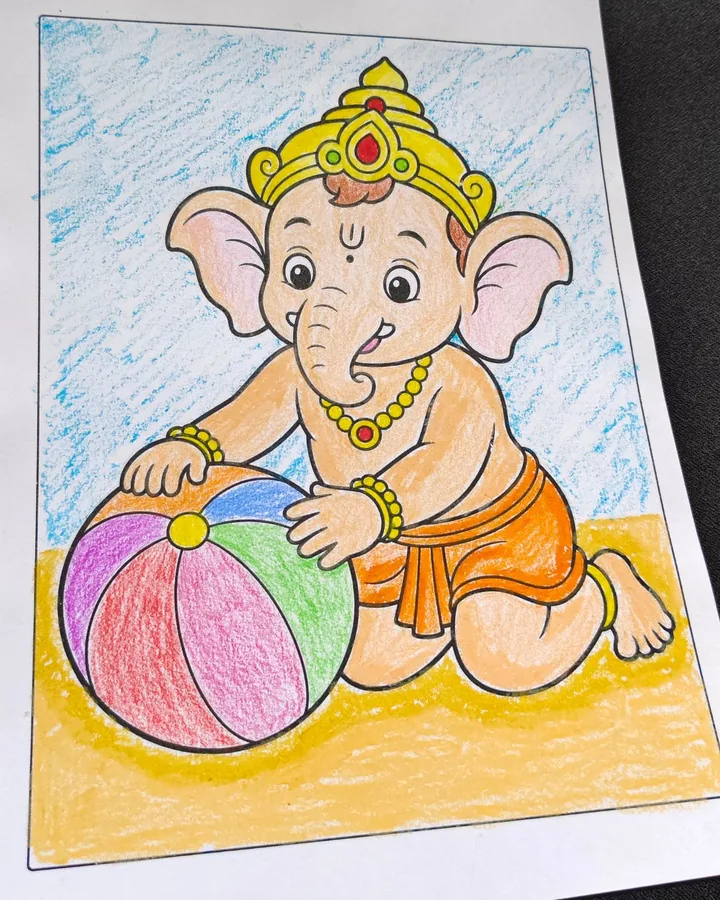
A Ganesha coloring book is often one of the easiest choices for younger children. Lord Ganesha's familiar form, gentle presence, and association with new beginnings make this theme especially suitable for a child's first devotional coloring experience.
Choose this option for preschoolers, kindergarten-aged children, or kids who enjoy simple, cheerful activities. It is also a practical pick for parents and teachers planning a small cultural activity that can be completed in one sitting.
For a child starting a new school year, joining a class, or preparing for a family celebration, the Ganesha book can feel particularly meaningful. Add crayons, colored pencils, or washable markers, and it becomes an easy, ready-to-give activity bundle.
Best for Children Who Love Hanuman
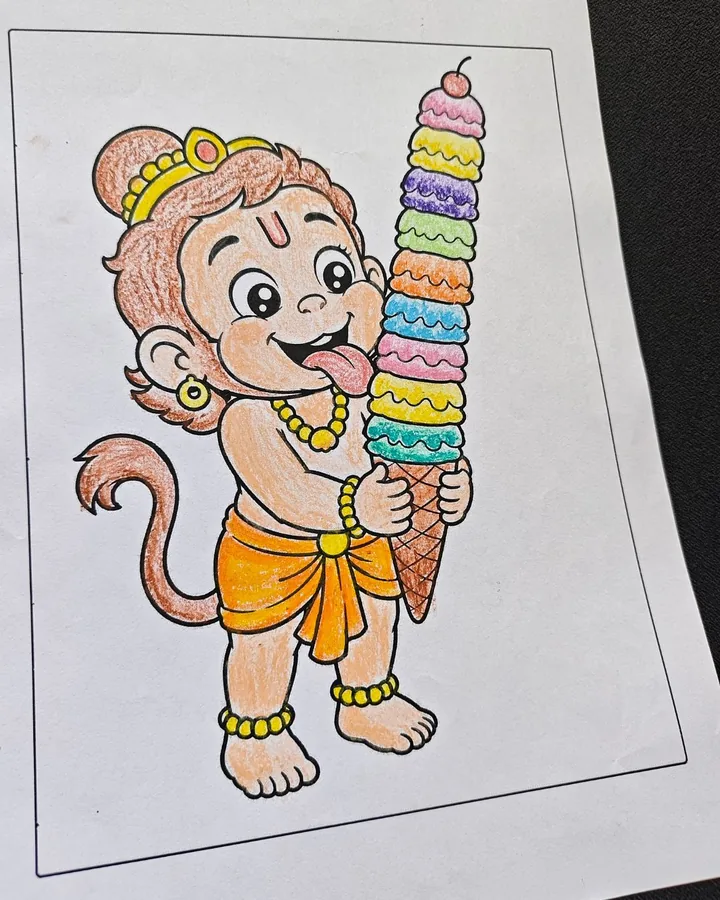
The Hanuman coloring book is ideal for children who enjoy bold characters, courage, loyalty, and action-filled stories. It is a natural fit for kids who like to imagine themselves as helpers, protectors, and adventurers.
Use this book as a calm, creative companion to family storytelling. After your child colors a page, ask open-ended questions: "What do you think Hanuman is doing here?" or "How would you help a friend today?" These prompts keep the activity child-led while encouraging reflection.
A Hanuman-themed book may be especially appealing to children who lose interest in very quiet or decorative coloring pages. The theme gives them a sense of energy and movement, while coloring itself offers a screen-free way to slow down.
Best for Children Who Enjoy Rama Stories
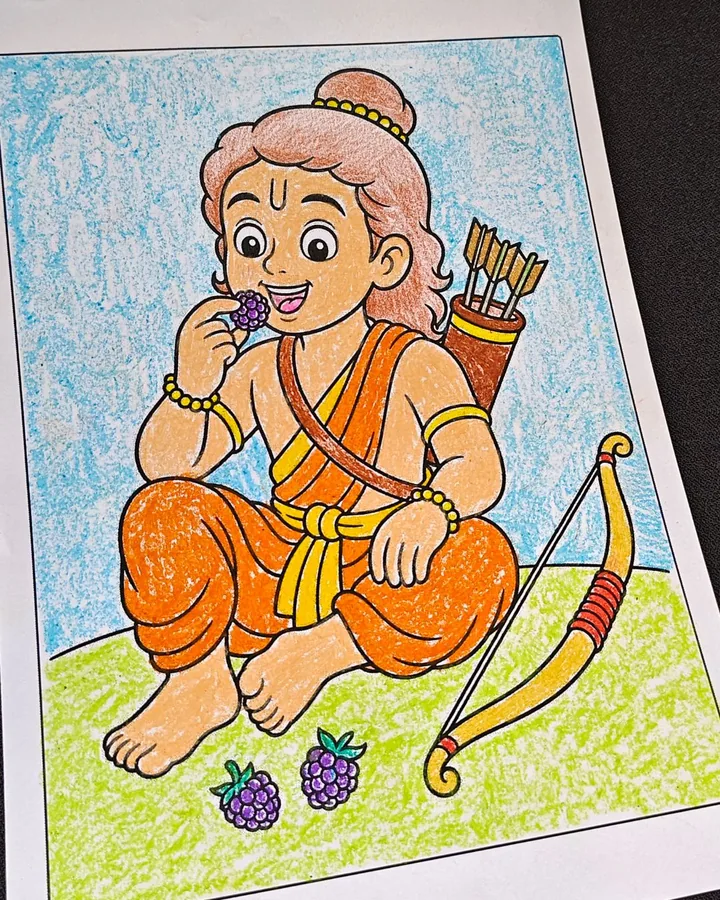
Choose the Rama coloring book for children who enjoy stories that unfold over time. Rama-inspired pages can support a family reading routine, especially when parents or grandparents want to introduce parts of the Ramayana through conversation, pictures, and creativity.
This book is often best for children ages six and up, particularly those who enjoy recognizing characters, retelling scenes, or asking "what happens next?" It can also work well for siblings: an older child can explain what they remember while a younger child colors.
Use it during family activity time around Rama Navami or Diwali, or pair it with a child-friendly Ramayana storybook. Keep the focus on the child's connection to bravery, kindness, family, friendship, and doing the right thing rather than expecting them to memorize every detail.
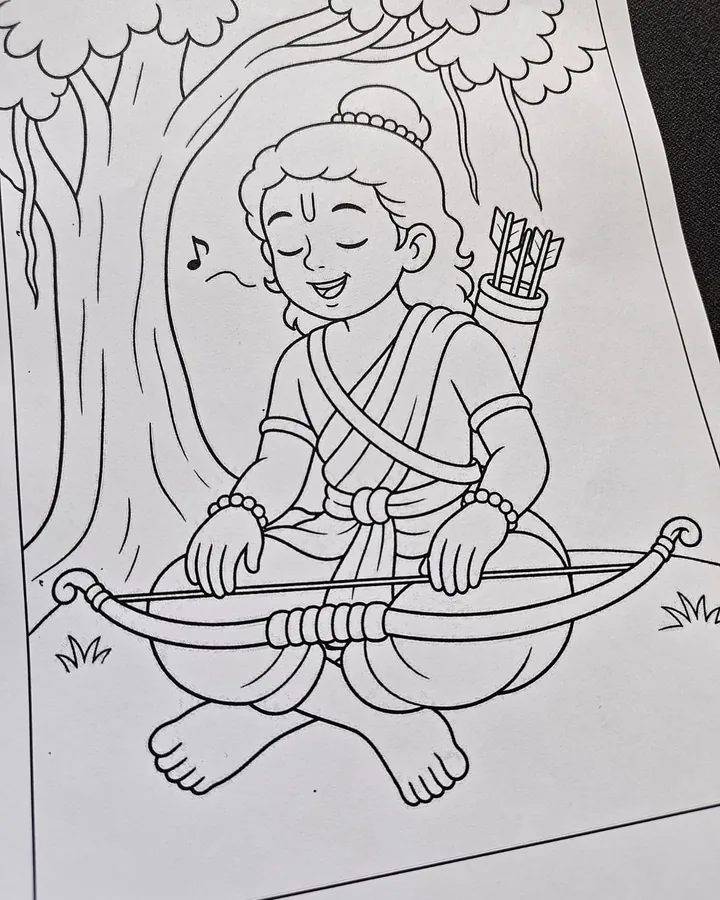
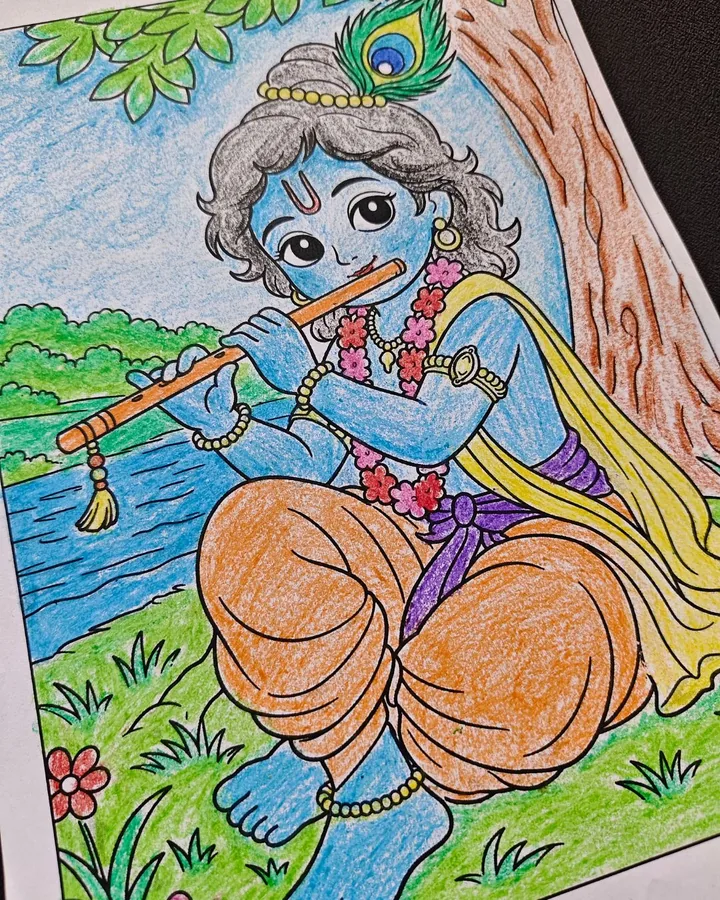
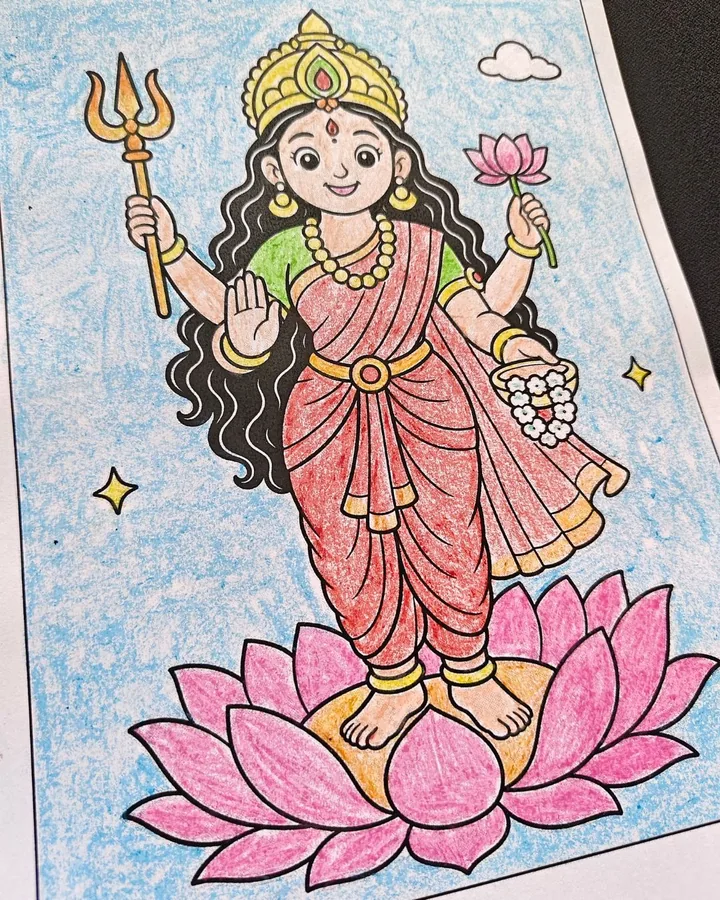
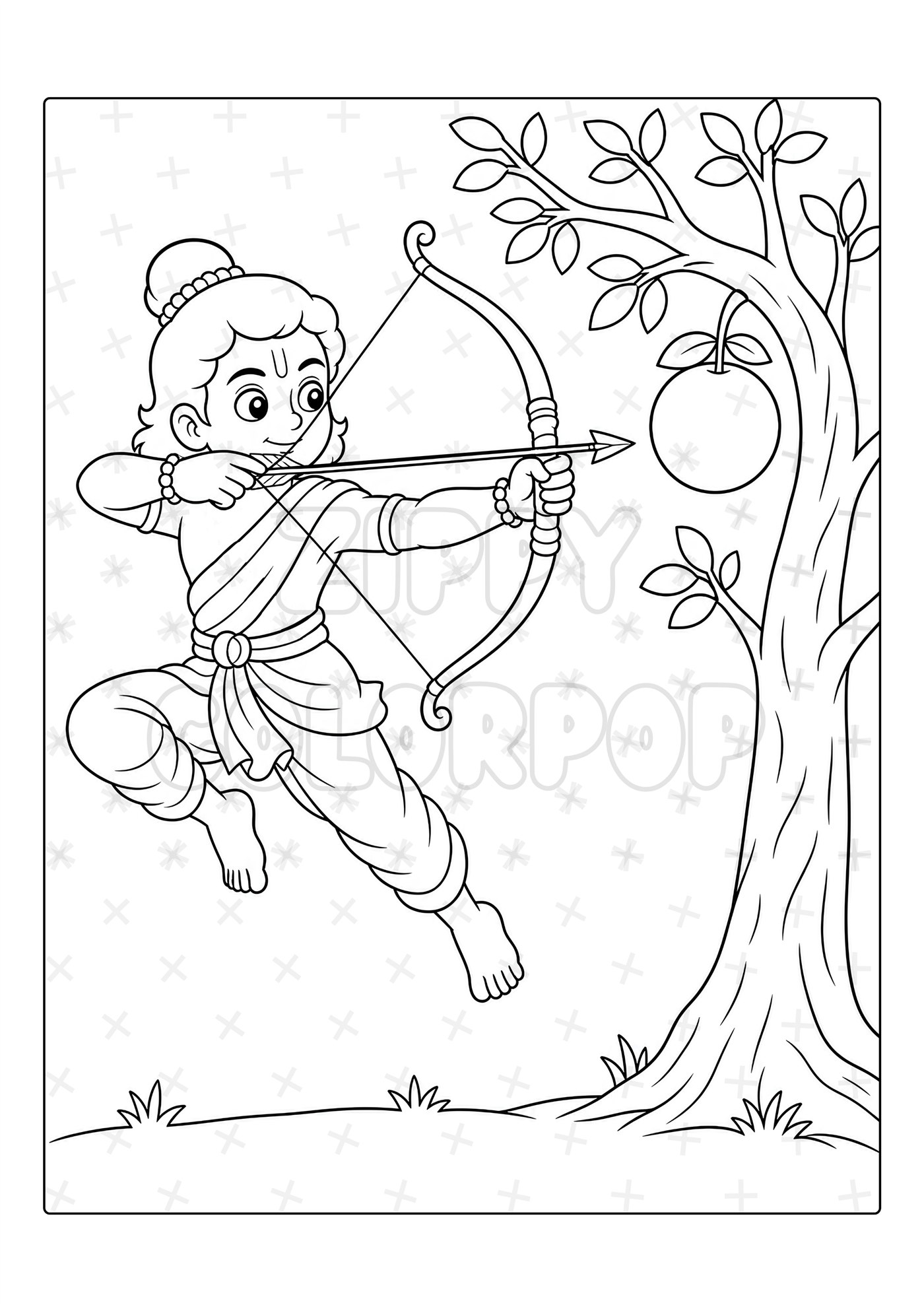
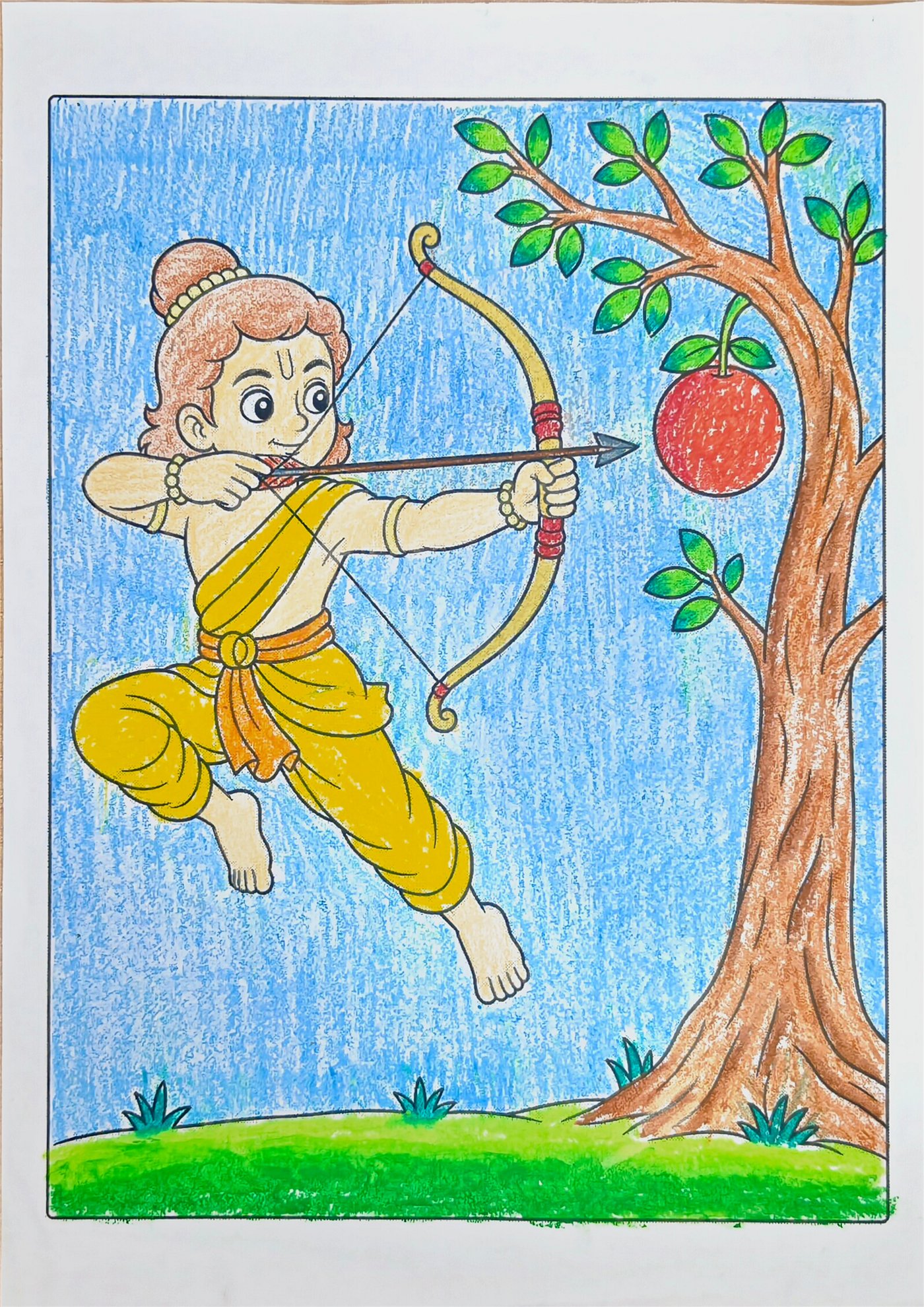
Rama Coloring Page: From Outline to Imagination
Seeing the same Rama page before and after coloring helps children imagine how a simple black-and-white outline can become a bright, story-filled artwork.
Best All-Round Hindu Gods Coloring Book
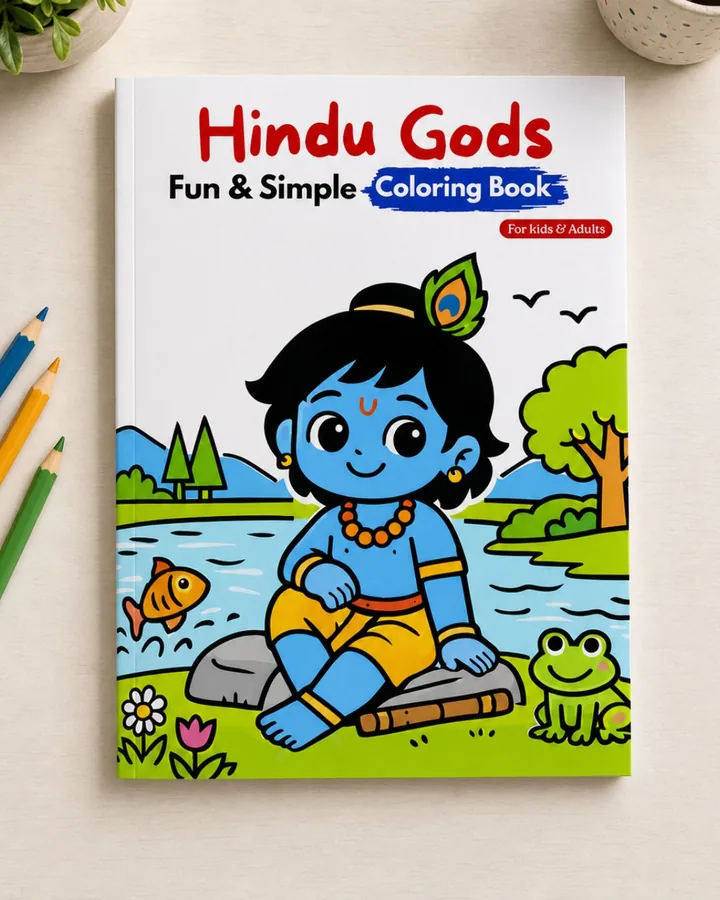
The Hindu Gods coloring book is the most flexible option for families who want variety. Instead of choosing one deity immediately, this format allows children to explore multiple familiar figures and discover what interests them most.
It is a helpful choice for siblings with different preferences, classrooms with mixed levels of familiarity, or gift-givers who are unsure which deity a child loves most. It can also be a good follow-up after a child has completed a single-deity book and is ready for something broader.
This all-round option is especially useful when searching for an Indian coloring book that feels culturally meaningful without focusing on only one story. It provides variety for repeat coloring sessions and more opportunities for adults to share family traditions naturally.
Choosing by Age, Interest, and Occasion
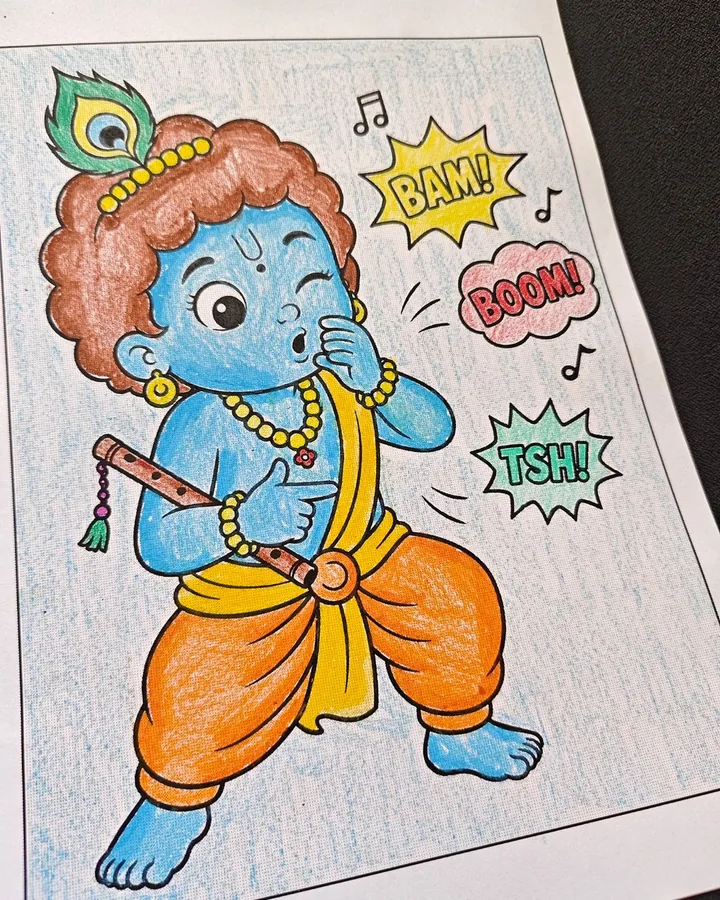
For children ages four to six, begin with Krishna or Ganesha themes and choose simple tools such as chunky crayons or washable markers. Keep coloring sessions short and celebratory.
For ages seven to nine, Hanuman and Krishna books can be particularly engaging because children may enjoy discussing character traits while they color. This is also a good stage to introduce short stories alongside the activity.
For ages ten to twelve, consider Rama stories or a broader Hindu Gods coloring book. Older children may enjoy comparing characters, noticing story details, and using colored pencils for more control.
When choosing a gift, match the book to the moment:
- Choose Krishna for a playful birthday or Janmashtami gift.
- Choose Ganesha for return gifts, school milestones, or a child's first coloring book.
- Choose Hanuman for a child who loves brave, high-energy characters.
- Choose Rama for a family storytelling activity.
- Choose Hindu Gods for a festival basket, classroom resource, or siblings.
Add Storytelling Without Adding Screen Time
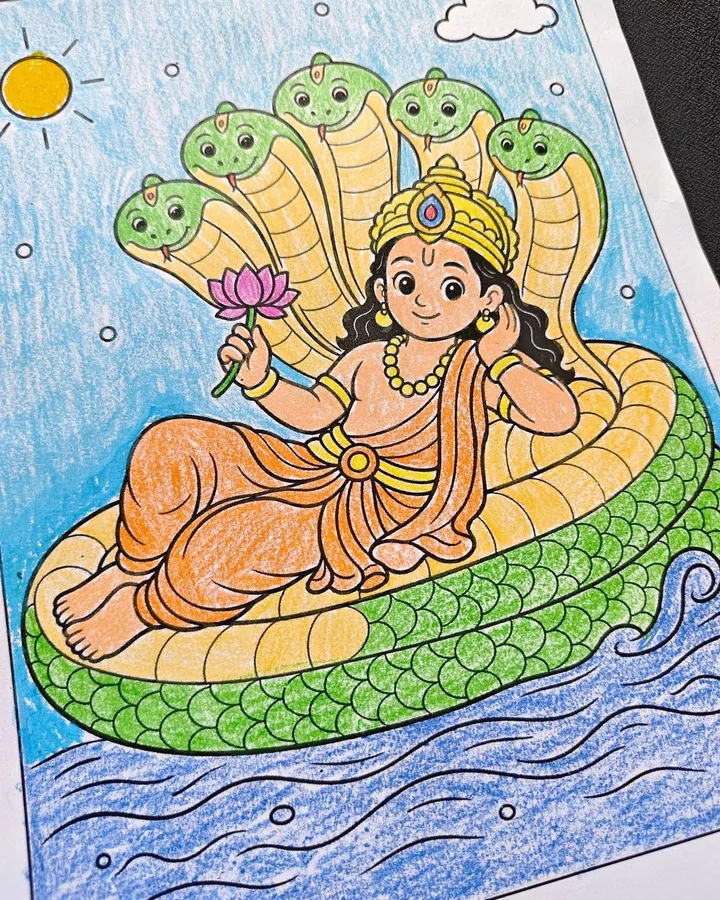
Coloring works best when it feels calm and shared. Sit nearby, ask simple questions, and let your child lead with color choices. You can also pair coloring time with short stories, bhajans, or gentle video inspiration when you want a richer activity.
For more watch-and-color ideas, visit the Zippy Colorpop YouTube channel and use the videos as a light companion to creative time.
FAQs
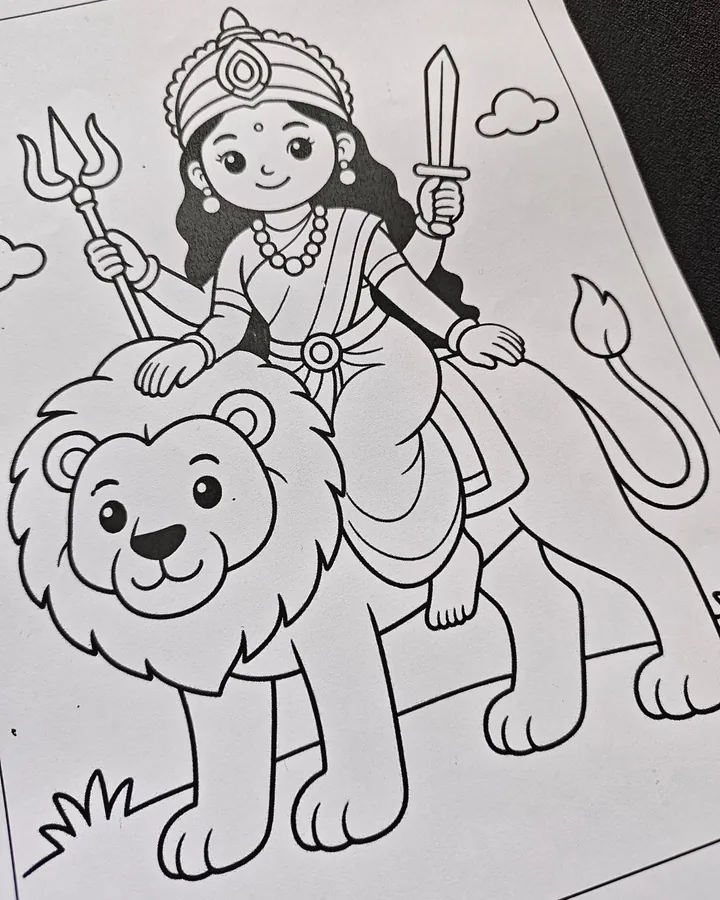
Which Hindu coloring book is best for a four-year-old?
A Ganesha or Krishna coloring book is usually the easiest place to start. Choose pages with bold outlines and keep the activity relaxed. The best book is the one your child is excited to open.
Are Hindu coloring books suitable as gifts?
Yes. Hindu coloring books make meaningful, practical gifts for birthdays, festivals, return gifts, and family celebrations. Pair one with crayons or colored pencils for an easy gift set.
Should I choose one deity or a Hindu Gods coloring book?
Choose one deity when the child already has a favorite story or strong connection. Choose a Hindu Gods coloring book when you want more variety or are not yet sure which theme they will enjoy most.
Can teachers use these books in classrooms?
They can work well as cultural-learning activities when used respectfully and with age-appropriate context. For lesson planning, keep the activity simple, explain symbols carefully, and invite children to ask questions without pressure.
Find the Book That Feels Personal
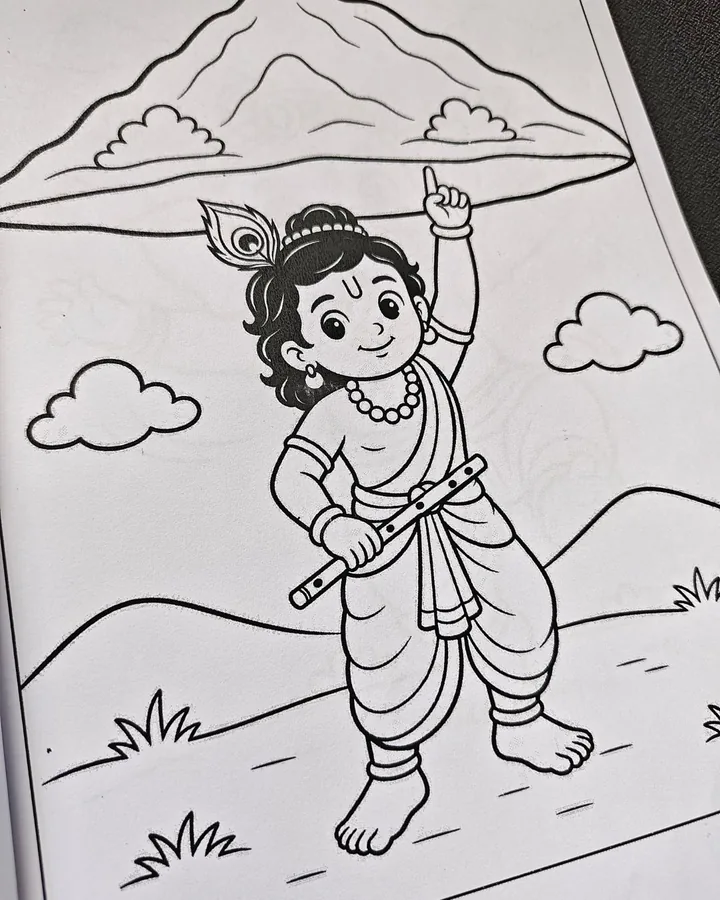
The best Hindu coloring book is not necessarily the one with the most pages. It is the one that helps a child feel curious, included, and excited to create.
Start with the deity, story, or celebration that feels familiar to your child. Then make coloring time part of the memory: sit together, share a story, display their artwork, and let their questions lead the way.