How Coloring Can Reduce Everyday Stress
After a long day, relaxing is not always as simple as deciding to relax. Your mind may still be replaying conversations, thinking about unfinished work, checking notifications, or jumping ahead to tomorrow.
Coloring offers a very different kind of activity.
It asks you to choose a color, focus on a shape, and make one small decision at a time.
Research suggests that coloring-particularly structured or mindful coloring- may help reduce short-term anxiety or perceived stress for some people, although the evidence varies depending on the type of coloring, the setting, and how the activity is used.
Coloring is not a treatment for an anxiety disorder or chronic stress. But as an everyday creative activity, it can be an inexpensive and screen-free way to slow down, focus your attention, and create a transition between a busy day and quieter time.
Does Coloring Reduce Stress?
Coloring may help reduce everyday stress by giving your attention a simple, structured task. Some controlled studies have found reductions in anxiety or perceived stress after coloring sessions, particularly when coloring is combined with mindful attention.
For example, a randomized study involving university students found decreases in test anxiety after both mandala coloring and free coloring activities.
Another randomized trial involving emergency department patients found that participants who used adult coloring materials reported a greater reduction in anxiety over two hours than participants given a placebo activity.
Research among nurses has also found reductions in perceived stress after a brief mindful-coloring program.
The important word, however, is may.
Coloring does not work identically for everyone, and researchers have not found positive effects in every experiment.
How Does Coloring Reduce Everyday Stress?
There probably is not one single mechanism.
Coloring combines several features that can make it feel relaxing:
Together, these features may temporarily shift attention away from the mental clutter of everyday life.
- Focused attention
- Repetitive hand movement
- Limited decision-making
- Creative expression
- Reduced screen exposure
- A clear activity with no complicated goal
1. Coloring Gives Your Attention One Simple Job
Stress often comes with competing thoughts.
You might be thinking about an email while remembering something you forgot to buy while worrying about tomorrow's schedule.
Coloring narrows the task.
Which color should go here?
Where does this shape end?
What part should I color next?
Those questions are small and immediate.
Instead of solving everything happening in your life, you temporarily direct attention toward the page in front of you.
That does not make problems disappear. It simply gives your mind another place to rest its attention for a while.
2. Coloring Can Become a Mindfulness Activity
Mindfulness generally involves intentionally paying attention to what is happening in the present moment.
Coloring can support this type of attention when you notice:
Research suggests the way coloring is approached may matter.
In one experiment, ordinary unguided mandala coloring did not significantly change participants' anxiety or mindfulness. In a second experiment, however, coloring combined with mindfulness guidance produced a greater decrease in anxiety.
That suggests that simply opening a coloring book is not automatically the same thing as practicing mindfulness.
Your attention matters too.
- The movement of the pencil
- The color appearing on the page
- The boundaries of a shape
- The pressure of your hand
- The texture of the paper
- Your breathing while you color
3. Coloring Creates a Break From Constant Decisions
Many adults spend much of the day making decisions.
What should I answer?
Which task comes first?
What should we eat?
When should I leave?
Did I forget something?
Even recreational screen time can involve constant choices: which message to answer, which video to watch, what to search for, or what to scroll past.
Coloring dramatically reduces the number of decisions.
You mostly choose colors and decide where to place them.
For someone mentally tired after work, that simplicity can be part of the appeal.
4. Coloring Is a Screen-Free Relaxation Activity
Phones are useful, but they are not always restful.
You may open your phone to relax and quickly find yourself moving between messages, news, social media, work notifications, videos, and advertisements.
Coloring creates a natural boundary from that stream of information.
All you need is:
There are no notifications hidden inside a coloring page.
For people looking for screen-free relaxation activities, that simplicity can make coloring especially practical.
- A coloring page or book
- Crayons, pencils, or markers
- A comfortable place to sit
- A few uninterrupted minutes
5. Coloring Offers Creativity Without Requiring Artistic Skill
Starting with a blank piece of paper can feel intimidating.
A coloring book removes part of that pressure because the basic illustration already exists.
You do not have to decide what to draw.
You do not need advanced artistic skills.
You simply choose how you want the finished page to look.
That balance between structure and personal choice is one reason coloring can feel easier to begin than many other creative hobbies.
There is also no requirement to make the finished picture perfect.
The purpose of relaxing coloring is the activity itself, not producing gallery-quality artwork.
6. Repetitive Coloring Can Feel Settling
Coloring often involves repeated movements:
Fill a space.
Move to another section.
Choose another color.
Repeat.
Activities with a predictable rhythm can require less mental switching than tasks involving constant new information.
For some people, that repetitive process creates a feeling of settling into the activity.
The page gradually changes while the task itself remains simple.
7. Coloring Gives You a Visible Sense of Progress
Many sources of everyday stress involve work that never feels completely finished.
There is always another email, another household task, another appointment, or another responsibility waiting.
A coloring page is different.
You can see your progress.
An empty shape becomes colored.
A section gets completed.
Eventually, the page may be finished.
That visible progress can make coloring satisfying even when the activity has no productive goal beyond enjoying it.
What Does the Research Say About Coloring and Stress?
Research on coloring is encouraging, but it should be interpreted carefully.
A 2024 study followed 140 university students who completed at least 10 minutes of self-guided coloring six times over two weeks. Students completing the sessions showed improvements across measures including perceived stress, anxiety, wellbeing, and mindfulness. The researchers noted that more work is needed to determine how well those findings generalize beyond university students.
A randomized study among nurses found that a short mindful-coloring program was associated with lower perceived stress compared with a wait-list control group.
More recent research has also examined mandala coloring in clinical settings. A 2026 meta-analysis covering 17 studies and 987 hospitalized adults found reductions in anxiety and stress, but the authors rated the overall evidence as low quality and cautioned against broad generalization.
So the reasonable takeaway is:
Coloring may be a helpful relaxation tool, particularly for short-term stress and anxiety, but it should be viewed as a supportive activity rather than a medical treatment.
Is Coloring Relaxing for Adults?
It can be.
Adults often associate coloring with childhood, but the basic activity does not have an age limit.
Adults may enjoy coloring because it provides:
Different adults also prefer different illustration styles.
Some enjoy intricate mandalas and complex patterns. Others find detailed designs frustrating and prefer bold, easy coloring pages with larger spaces.
There is no scientific rule saying complicated coloring pages are inherently more relaxing.
Choose a style you actually enjoy.
- A break from screens
- A focused creative task
- An easy evening hobby
- Something to do with their hands
- A low-pressure way to be creative
- A shared activity with children or family
Are Mandalas Better for Stress Relief?
Mandala coloring has received considerable research attention, and several studies have reported beneficial effects.
However, the evidence does not establish that mandalas are always superior to every other form of coloring.
One university study found that both mandala coloring and free coloring reduced test anxiety.
Another experiment found no significant improvement from unguided mandala coloring but did find lower anxiety when participants received mindfulness-based instructions while coloring.
So instead of asking whether mandalas are always better, ask:
Which type of coloring helps me become absorbed in the activity without becoming frustrated?
For one person, that may be an intricate mandala.
For another, it may be flowers.
For someone else, it may be animals, cultural illustrations, or very simple bold designs.
How to Use Coloring for Everyday Relaxation
You do not need a complicated routine.
Try this simple approach.
Step 1: Put Your Phone Aside
Place it somewhere you do not need to see every notification.
Even ten minutes without checking it can make the coloring session feel different from ordinary screen-based downtime.
Step 2: Choose an Easy Page
Do not start with the most complicated illustration unless complexity is what you enjoy.
Choose something that feels inviting.
Step 3: Set Aside 10-20 Minutes
Research interventions vary considerably, but many coloring studies use relatively short sessions.
You do not need to finish the picture.
The goal is to spend time with the activity.
Step 4: Pay Attention to the Process
Notice the pencil moving across the paper.
Look at the color filling the space.
If your mind wanders back to tomorrow's tasks, gently return your attention to the page.
Step 5: Forget About Perfect Coloring
You can color outside the lines.
You can choose unrealistic colors.
You can stop halfway through.
Relaxation disappears quickly when a hobby becomes another performance standard.
When Is a Good Time to Color?
Coloring can fit into small parts of an ordinary day.
After Work
Try coloring for ten or fifteen minutes before switching into your evening routine.
It can act as a transition between work mode and personal time.
Before Bed
If scrolling is keeping you online longer than you intended, a physical coloring book can provide a screen-free alternative.
During a Quiet Weekend
Color while listening to music, an audiobook, or simply enjoying some quiet.
While Traveling
A coloring book and pencils can provide an offline activity during flights, train rides, or long waits.
With Your Children
Coloring does not have to be a solitary adult hobby.
Parents and children can sit at the same table and color together.
That creates a different kind of relaxation: less about escaping family activity and more about making that activity slower and more creative.
Coloring Together as a Family
For families, coloring can become a simple shared screen-free activity.
Children can work on their own pages while parents or grandparents color alongside them, help choose colors, or talk about the illustrations.
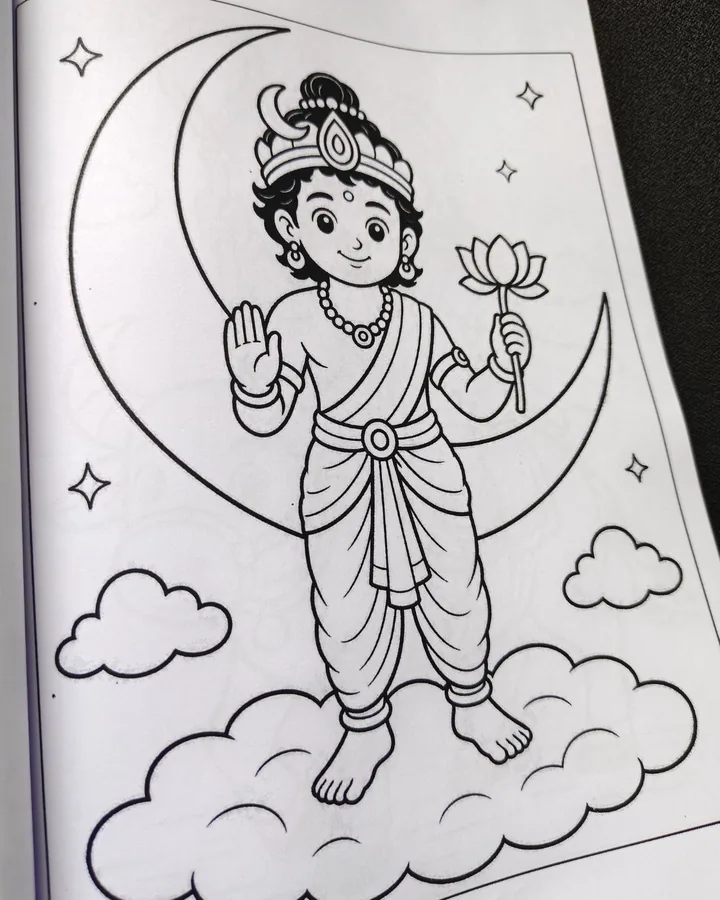
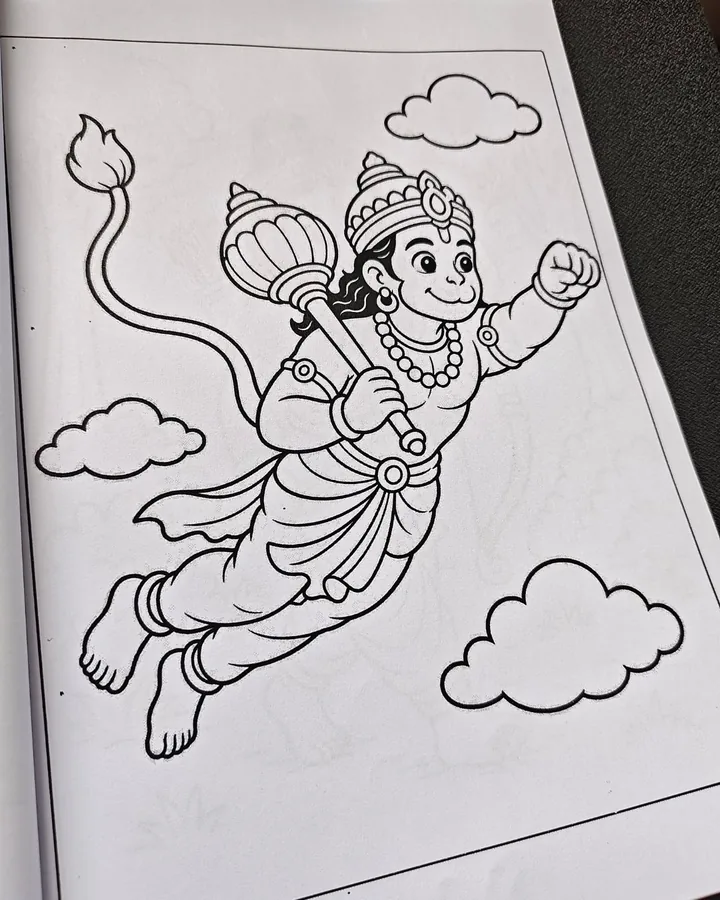
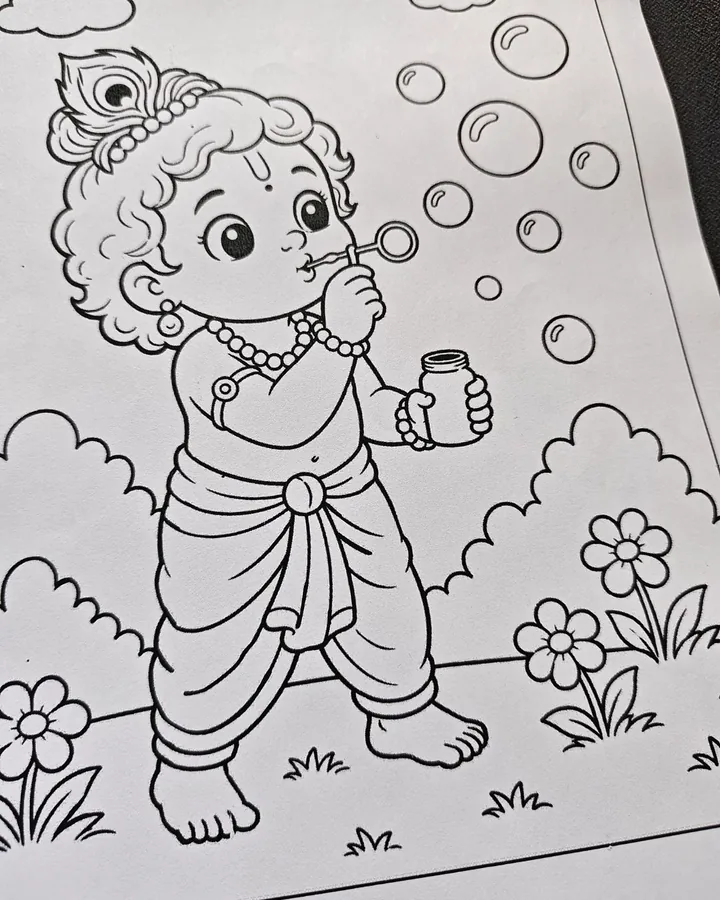
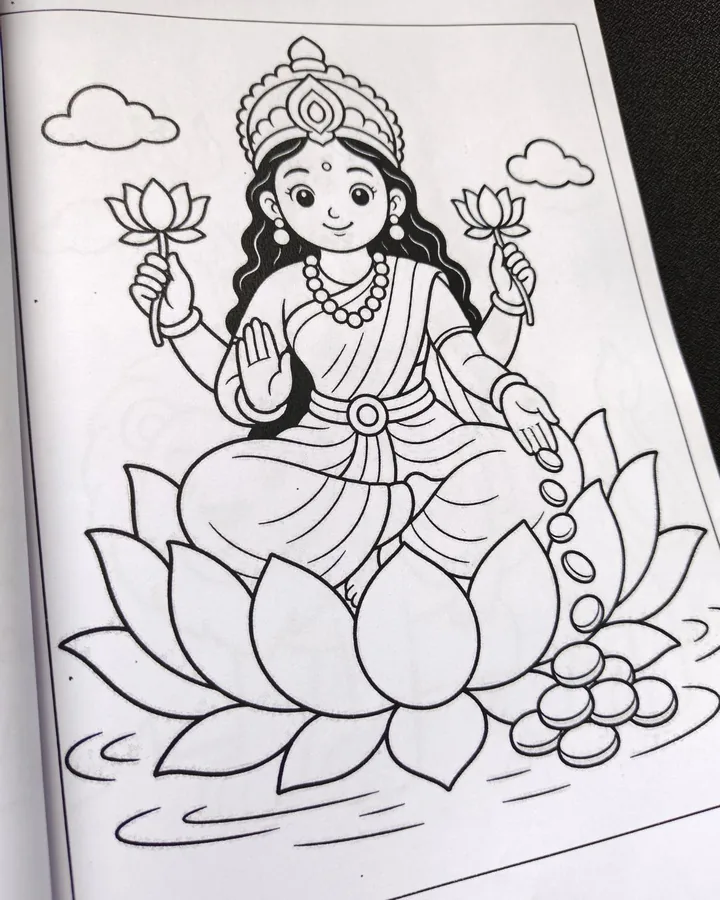
Zippy Colorpop's current collection is designed specifically for children and features Hindu Gods, Lord Krishna, Lord Hanuman, Lord Ganesh, and Lord Rama. The five available books each contain 30 drawings across 64 pages and are positioned as simple, screen-free coloring books for kids.
These are not adult therapeutic coloring books, and they should not be described as treatments for stress.
Their relevance here is simpler: they can provide families with a physical creative activity that gets everyone away from screens for a while.
For a parent who finds highly intricate adult coloring books tiring, sitting beside a child and casually coloring simple pictures can also be an enjoyable way to participate without turning relaxation into another demanding task.
What Are Some Other Creative Hobbies for Stress Relief?
Coloring is only one option.
Other low-pressure creative activities include:
The best relaxing hobby is usually one you enjoy enough to return to regularly.
If an activity feels like another obligation, choose something else.
- Sketching
- Knitting
- Simple painting
- Clay modeling
- Origami
- Gardening
- Journaling
- Puzzles
- Crafting
- Playing a musical instrument
When Coloring Is Not Enough
Everyday stress and a mental-health condition are not the same thing.
Coloring can be a pleasant self-care activity, but it should not be presented as a substitute for professional support when stress or anxiety is severe, persistent, or interfering with daily life.
Think of coloring as one possible tool in a larger relaxation routine-not a cure.
Final Thoughts: Can Coloring Really Help With Everyday Stress?
Coloring may help reduce everyday stress by focusing attention on a simple creative task, providing a break from screens, and creating space for slower, more deliberate activity.
Research has found promising short-term reductions in anxiety or perceived stress in several populations, although results are not universal and the quality of evidence varies.
You also do not need an elaborate routine.
Choose a page you like.
Put your phone away.
Pick up a few colors.
Spend ten quiet minutes doing something that does not need to be optimized, completed, shared, or judged.
Sometimes that is enough to make a busy day feel a little quieter.
Frequently Asked Questions
Does coloring reduce stress?
Coloring may help reduce short-term stress or anxiety for some people. Several controlled studies have found beneficial effects, particularly with structured or mindful coloring, although research results are not universally positive.
How does coloring reduce stress?
Coloring may help by directing attention toward a simple task, reducing mental multitasking, encouraging present-moment focus, and providing an offline creative activity.
Why is coloring relaxing for adults?
Many adults enjoy coloring because it combines structure with creativity. The image already exists, so the person can focus on choosing colors and filling spaces instead of creating artwork from scratch.
Is coloring a mindfulness activity?
It can be. Coloring becomes more mindfulness-oriented when you deliberately pay attention to the present experience-the movement of your hand, the colors, shapes, and sensations-rather than coloring automatically. Research suggests mindful guidance may influence the benefits.
How long should I color for relaxation?
There is no established ideal duration for everyday use. Research studies have used different session lengths, including relatively brief sessions. A practical starting point is 10-20 minutes and adjusting based on what feels enjoyable.
Are mandala coloring books better for relaxation?
Not necessarily. Mandalas have been studied frequently, but other types of coloring may also be helpful. Choose artwork that holds your attention without making the activity frustrating.
Is coloring a good screen-free activity?
Yes. A physical coloring book can be used without a phone, computer, television, app, or internet connection, making it an easy option for screen-free downtime.
Can parents and children color together?
Yes. Family coloring can provide a shared creative activity without requiring screens. Parents can color alongside their children, talk about the pictures, or simply enjoy quiet time together.