The Benefits of Coloring for Child Development
Coloring may look like simple play, but it gives children opportunities to practice several useful developing skills at once.
Holding a crayon, moving it across the page, choosing colors, following shapes, and deciding how a picture should look all involve different combinations of fine-motor control, visual attention, coordination, creativity, and language.
The American Academy of Pediatrics notes that crayons, colored pencils, coloring books, and other writing supplies can help children build fine-motor skills. The National Association for the Education of Young Children also recommends drawing, scribbling, and writing with crayons, pencils, and markers as ways children can practice control of the small muscles in their hands.
Coloring should not be treated as a shortcut to development or a replacement for active play, drawing, reading, conversation, and other learning experiences. Instead, it can be one simple part of a varied childhood filled with opportunities to create and explore.
What Are the Benefits of Coloring for Child Development?
Coloring can give children practice with fine-motor control, visual-motor coordination, crayon and pencil use, color recognition, creativity, attention, and decision-making. It can also provide a simple screen-free activity that parents and children can enjoy together.
The main benefits include:
Let's look at each one more closely.
- Fine-motor practice
- Hand and finger control
- Visual-motor coordination
- Early pencil and pre-writing practice
- Color vocabulary and recognition
- Creativity and independent choices
- Screen-free family interaction
1. Coloring Helps Children Practice Fine-Motor Skills
Fine-motor skills involve controlled movements of the small muscles in the hands and fingers.
Children use these skills for everyday tasks such as:
When children hold and move a crayon or colored pencil, they repeatedly use their fingers, hands, and wrists.
NAEYC specifically includes drawing, scribbling, and writing with crayons, pencils, and markers among activities families can use to help children build fine-motor skills.
The American Academy of Pediatrics similarly states that art materials including coloring books, crayons, markers, and clay can help improve fine-motor skills.
Coloring is therefore not simply about producing a finished picture. The physical action itself gives young hands another opportunity to practice controlled movement.
- Holding utensils
- Buttoning clothing
- Turning pages
- Drawing
- Writing
- Using scissors
- Manipulating small objects
2. Coloring Supports Hand and Finger Control
A toddler may initially hold a crayon with their whole fist.
As children develop, they gradually become better able to control their fingers and use drawing tools more precisely.
The American Academy of Pediatrics notes that preschool-age children develop increasing control over the small muscles in their hands and fingers. Around age three, children are beginning to use crayons with increasingly mature hand positions and can perform activities such as copying circles and scribbling with greater control.
Coloring provides repeated opportunities to practice:
Children do not need to color perfectly inside the lines for the activity to be useful.
For younger children, simply making marks, experimenting with pressure, and controlling a crayon across the page are valuable experiences.
- Gripping a crayon
- Changing hand pressure
- Moving in different directions
- Starting and stopping movements
- Filling large and small spaces
- Switching between colors
3. Coloring Gives Children Visual-Motor Practice
Coloring requires children to connect what their eyes see with what their hands are doing.
They see the boundary of a shape and then attempt to move the crayon toward, around, or within that area.
This combination is related to visual-motor integration -the ability to coordinate visual information with controlled physical movement.
A 2025 study involving 505 preschool children found that performance on a coloring activity could be used to identify children's visual-motor integration status. The study did not prove that coloring itself causes better visual-motor development, but it demonstrates how closely coloring performance involves these skills.
When children color, they are practicing tasks such as:
This is one reason coloring can complement drawing, puzzles, building, cutting, and other hands-on activities.
- Looking at a shape
- Judging where its edges are
- Moving their hand toward a visual target
- Adjusting their movement as they color
- Coordinating repeated visual and hand movements
4. Coloring Can Support Early Pencil-Control Practice
Coloring is not the same as handwriting practice.
However, both activities require children to hold a tool and control its movement across paper.
That makes coloring one of several playful activities that can give children experience using the hands and fingers they will later rely on for writing.
Research on kindergarten interventions has found that structured activities targeting fine-motor and visual-motor skills can improve those abilities, although coloring alone should not be credited with all of those results.
For parents, the practical lesson is simple:
Do not worry about turning every coloring session into a handwriting lesson.
Instead, allow children to become comfortable handling crayons, pencils, paper, and other art materials.
Those experiences can sit alongside:
A variety of hands-on experiences is better than expecting one activity to develop every skill.
- Free drawing
- Tracing
- Playdough
- Cutting with child-safe scissors
- Puzzles
- Blocks
- Painting
- Writing and scribbling
5. Coloring Can Help Children Learn Colors and Color Words
Coloring creates natural opportunities to talk about colors.
The American Academy of Pediatrics notes that coloring can help young children build vocabulary and learn color names.
Parents can make this conversational rather than turning coloring into a test.
Instead of repeatedly asking:
"What color is this?" Try comments and questions such as:
This helps connect words with what children are seeing and doing.
It also leaves room for imagination.
A child does not need to make every tree green, every sky blue, or every animal realistic.
- "You chose a bright yellow."
- "Which color would you like next?"
- "I see blue and green together."
- "You made the tree purple-that's interesting!"
- "Which color is your favorite on this page?"
6. Coloring Encourages Creativity and Choice
Coloring books provide structure-the outlines already exist-but children still make many creative decisions.
They decide:
The American Academy of Pediatrics includes coloring materials among art activities that can help build children's creativity.
That creative freedom matters.
Parents can support it by resisting the temptation to correct every unusual choice.
If a child wants Lord Krishna's surroundings to be purple, a tree to be orange, or the moon to be green, the coloring session does not need to become a lesson in realism.
Ask about the choice instead.
"Tell me about the colors you picked." That opens conversation while allowing the child to feel ownership over the page.
- Which colors to use
- Which part to color first
- Whether colors should be realistic
- Whether to mix colors
- How much of the page to complete
- What the finished picture should look like
7. Coloring Can Encourage Attention to a Simple Task
Completing part of a coloring page requires children to keep returning their attention to a visual and physical task.
That does not mean coloring will magically "increase concentration" in every child.
A more accurate way to describe the benefit is that coloring provides an opportunity to practice staying engaged with a task.
Children may:
For young children, even a few minutes of engaged coloring may be enough.
Parents do not need to insist that every picture be completed.
Developmentally appropriate activities should fit the child's current interests and abilities rather than becoming endurance tests.
- Choose an area
- Work on it
- Notice progress
- Switch colors
- Continue with another part
- Decide when they are finished
8. Coloring Provides Screen-Free Creative Time
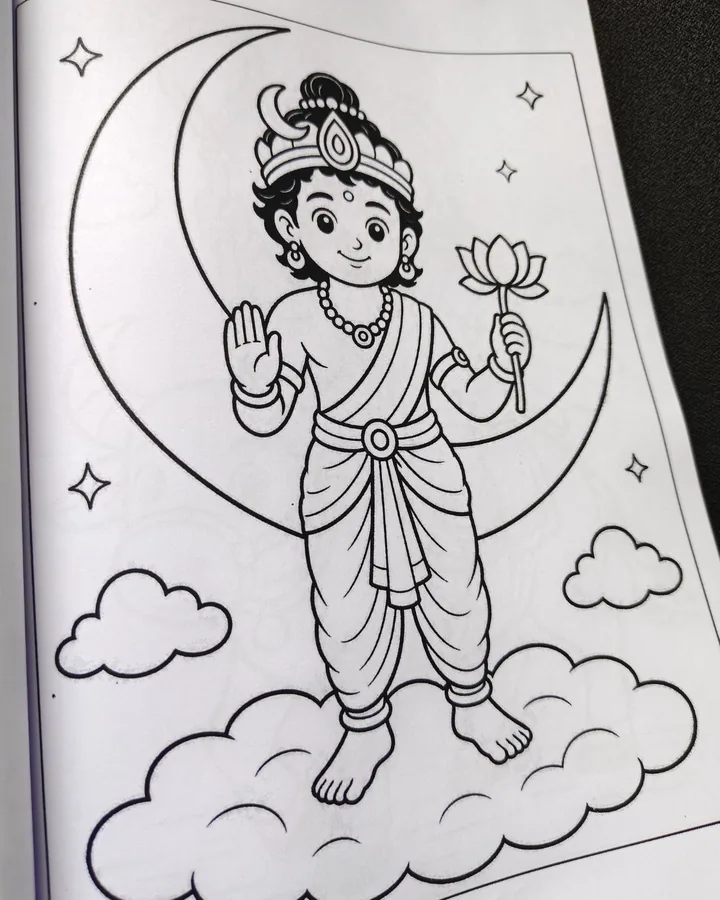
Physical coloring books provide an activity that does not require a phone, tablet, television, app, or internet connection.
This can make them useful for:
The American Academy of Pediatrics recommends balancing children's online and offline experiences and lists crayons, coloring books, and other art materials among non-tech gift ideas.
A screen-free activity does not have to be explicitly "educational" to be worthwhile.
Children benefit from time to make things, play, talk, move, imagine, and interact with other people.
- Quiet time at home
- Weekend activities
- Waiting rooms
- Travel
- Visits with grandparents
- After-school downtime
- Temple or cultural activities
- Family creative time
9. Coloring Can Create Opportunities for Parent-Child Conversation
One of the most overlooked benefits of coloring is what can happen around the coloring page.
A parent and child sitting together can naturally talk about:
The American Academy of Pediatrics emphasizes that play with parents, caregivers, and siblings supports children's development and relationships. Joint attention-when caregivers and children focus on something together while playing and talking-can also support language and social thinking.
The coloring book therefore does not need to do all the teaching.
Often, its greatest value is providing something that encourages interaction.
- Colors
- Objects in the picture
- Characters
- Feelings
- Stories
- Family experiences
- Cultural traditions
Coloring and Cultural Learning
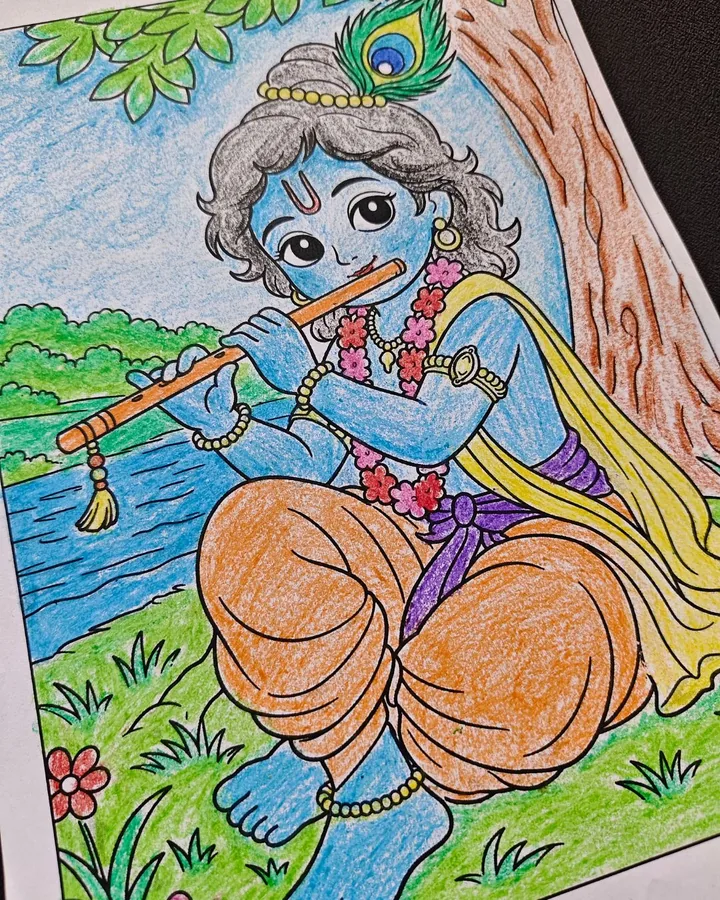
Coloring can also become a starting point for cultural conversation when the illustrations feature characters familiar to a child's family.
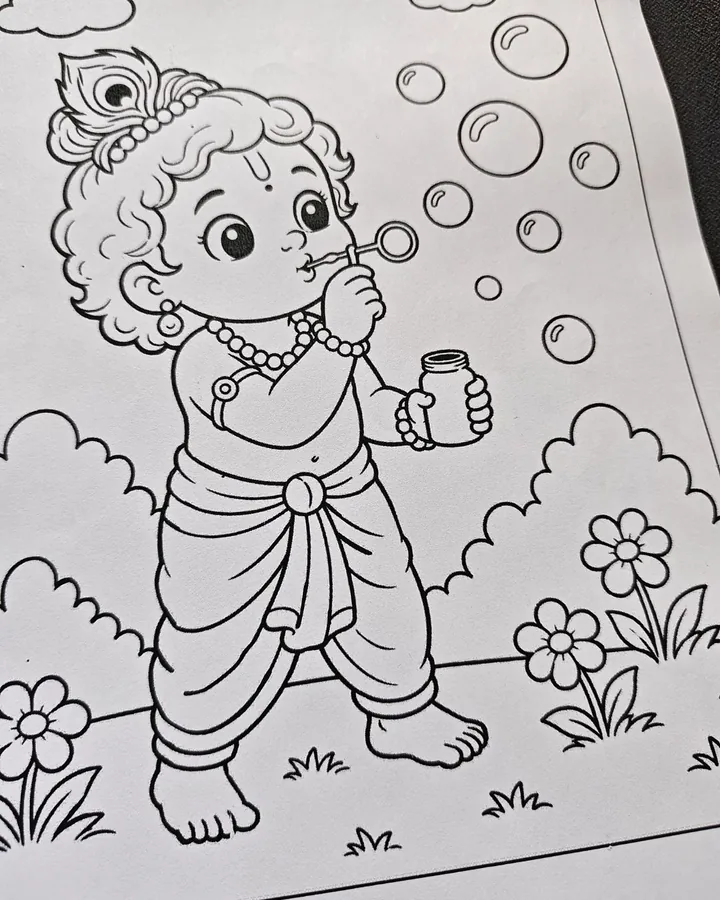
For example, a child coloring Lord Krishna may ask about his flute.
A Lord Ganesh picture may prompt a conversation about Ganesh Chaturthi.
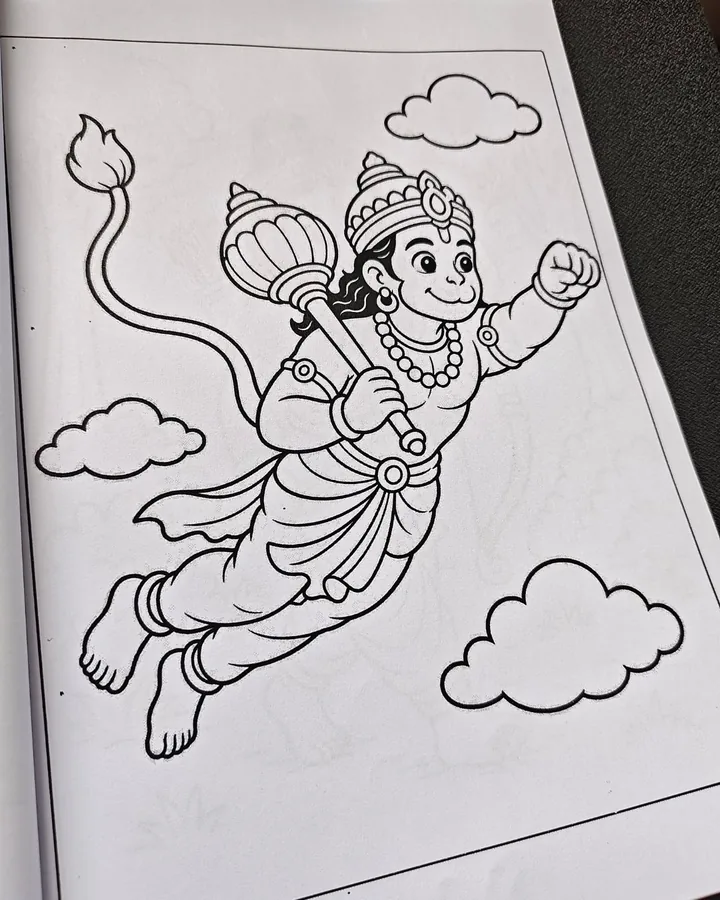
Lord Rama or Hanuman illustrations may remind a parent or grandparent of a story they want to share.
This is where culturally themed coloring books can be especially useful: the page gives the child something concrete to look at while an adult supplies the story and context.
A coloring book should not be presented as a substitute for learning about a culture, religion, or tradition. It can simply provide an approachable entry point for conversation.
How Zippy Colorpop Coloring Books Fit In
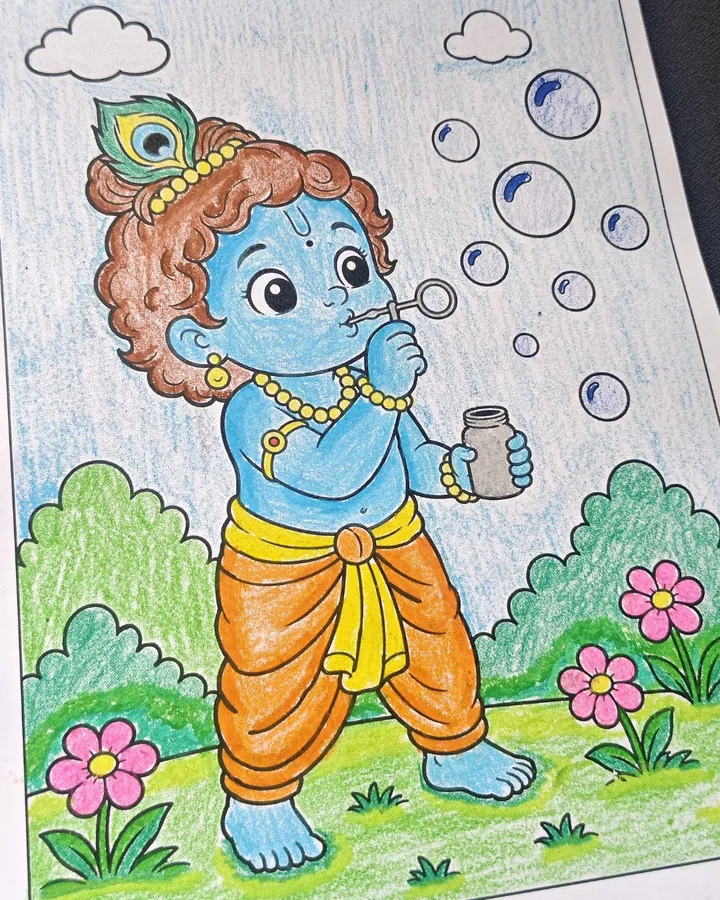
Zippy Colorpop currently offers five Hindu-themed coloring books for children:
The current collection is designed for kids and centers on Hindu gods, Indian deities, and simple cultural scenes. Each available book contains 30 unique drawings across 64 pages.
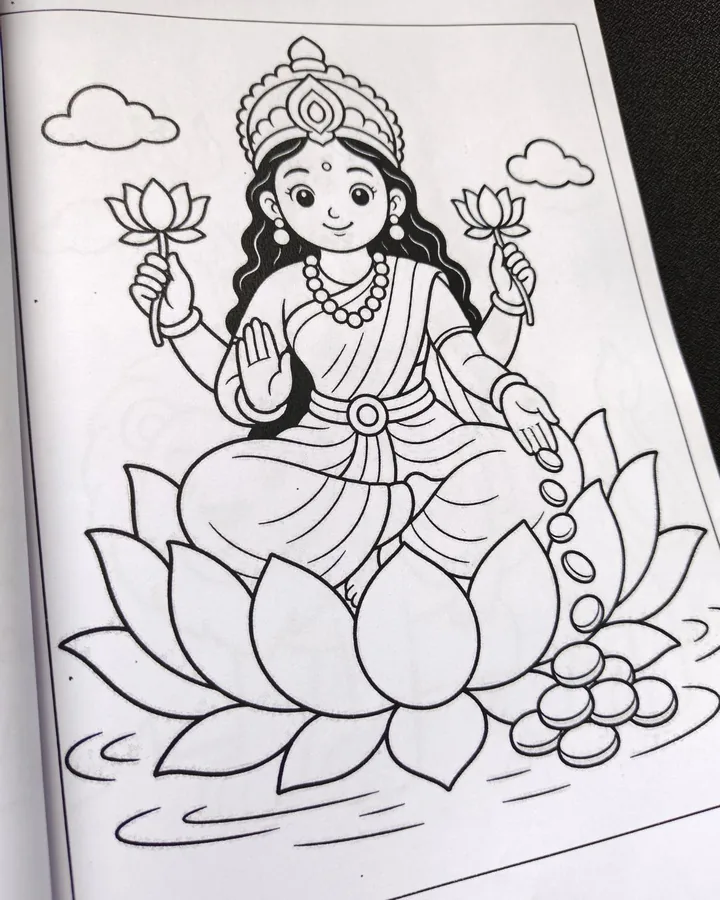
The Hindu Gods book, for example, includes Lord Krishna, Ganesha, Hanuman ji, Lord Rama, Shiva, Saraswati, and other deities. It uses a large 8.5 x 11-inch format with single-sided pages.
The Krishna book follows the same 30-drawing, 64-page, 8.5 x 11-inch single-sided format and features playful Lord Krishna scenes designed for young artists.
These books should not be described as clinical developmental tools or formal educational workbooks.
Their role is simpler: they provide children with an accessible coloring activity that can combine creative practice, screen-free time, and cultural conversation.
- Hindu Gods Fun & Simple Coloring Book
- Lord Krishna Fun & Simple Coloring Book
- Lord Hanuman Fun & Simple Coloring Book
- Lord Ganesh Fun & Simple Coloring Book
- Lord Rama Fun & Simple Coloring Book
How Parents Can Get More From Coloring Time
You do not need to turn coloring into a structured lesson.
A few simple habits can make the activity richer.
Let the Child Choose
Offer two or three pages and allow the child to select one.
Choice creates ownership.
Provide Different Coloring Tools
Depending on the child's age, try:
Different tools require slightly different types of control.
- Chunky crayons
- Regular crayons
- Colored pencils
- Washable markers
Talk Without Constantly Correcting
Instead of saying:
"Stay inside the lines." Try:
"I see you're using lots of blue." Or:
"Tell me about your picture." The conversation is often more valuable than a perfectly colored page.
Match Difficulty to the Child
Very intricate illustrations may frustrate younger children.
Simple pictures with larger open spaces can be more approachable for beginning colorists.
Mix Coloring With Other Activities
Coloring should be one activity among many.
Combine it with:
Child development happens through varied experiences, not one worksheet or coloring book.
- Outdoor play
- Building
- Drawing
- Reading
- Pretend play
- Puzzles
- Music
- Crafts
- Conversation
Coloring vs. Free Drawing: Which Is Better?
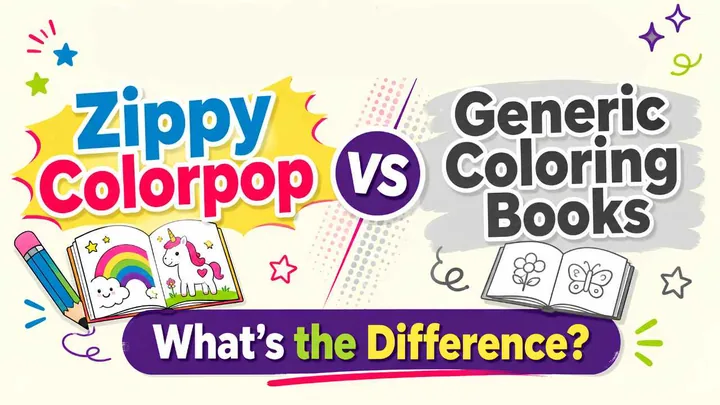
Neither needs to replace the other.
Coloring Books Free Drawing Provide existing shapes and Starts with a blank page boundaries Can feel easier for beginners Gives maximum creative freedom Encourages color choices Encourages children to invent images Provides visual-motor practice Combines drawing, planning, and expression Can connect to familiar characters Lets children create their own stories A healthy art routine can include both.
Some days a child may want a ready-made picture.
Other days they may want to scribble, draw a family member, invent a monster, or fill an entire page with circles.
Both experiences have value.
Does Coloring Improve Academic Performance?
This claim needs caution.
Fine-motor abilities and visual-motor integration are associated with several areas of children's learning. A 2025 systematic review and meta-analysis found positive associations between preschool fine-motor skills and academic abilities.
But that does not mean researchers have proven that giving a child more coloring pages will automatically improve reading or mathematics.
Correlation is not the same as causation.
A better conclusion is:
Coloring gives children practice with some of the fine-motor and visual-motor abilities that are useful in many school and everyday tasks.
It should complement-not replace-reading, conversation, active play, writing, building, problem solving, and other learning experiences.
What Age Should Children Start Coloring?
There is no single perfect age.
Children typically begin experimenting with crayons and scribbling during the toddler years, but abilities vary considerably.
The American Academy of Pediatrics describes drawing with crayons as an emerging accomplishment around age two and notes that children's hand and finger control continues to become more precise throughout the preschool years.
For younger children:
The goal is participation-not perfection.
- Use age-appropriate, non-toxic art materials
- Supervise the activity
- Choose larger shapes and simpler pictures
- Expect scribbling rather than precise coloring
- Keep sessions short and playful
Final Thoughts
The benefits of coloring for child development come mainly from what children practice while they color.
They hold and control drawing tools.
They coordinate their eyes and hands.
They make choices.
They explore colors.
They engage with a task.
They create.
And when an adult colors or talks alongside them, the activity can become an opportunity for language, storytelling, and connection.
Coloring is not a complete developmental program, and parents should not worry about producing perfectly colored pages.
Think of it instead as one small, enjoyable tool within a much larger world of childhood play and learning.
Give children crayons, a page that interests them, and permission to make it their own.
Frequently Asked Questions
Is coloring good for child development?
Yes, coloring can provide useful practice with fine-motor control, visual-motor coordination, color vocabulary, creativity, and using crayons or pencils. It works best as one part of a varied mix of play, art, reading, movement, and hands-on activities.
Does coloring help fine-motor skills?
Coloring involves controlled movements of the fingers, hands, and wrists. Both the American Academy of Pediatrics and NAEYC recommend drawing and coloring materials among activities that can help children practice fine-motor skills.
Does coloring improve hand-eye coordination?
Coloring requires children to coordinate visual information with hand movement. Researchers refer to this broader ability as visual-motor integration, and children's coloring performance has been shown to reflect differences in visual-motor development.
Can coloring help prepare children for writing?
Coloring gives children practice holding and moving crayons and pencils, which uses some of the same hand and finger abilities needed for writing. However, it should complement rather than replace drawing, scribbling, tracing, and actual writing practice.
Does coloring help children learn colors?
It can. Coloring gives parents natural opportunities to introduce and use color words, and the American Academy of Pediatrics notes that coloring can help young children learn color names and build vocabulary.
Is staying inside the lines important?
No. Younger children should not be expected to color perfectly within boundaries. Scribbling, experimenting, choosing colors, and controlling the drawing tool are valuable parts of the activity.
Are coloring books better than tablets for learning?
They serve different purposes. Physical coloring books provide hands-on and screen-free creative practice, while digital tools may offer other experiences. Children benefit from a balanced range of activities rather than relying exclusively on either format.
Are Zippy Colorpop books educational coloring books?
Zippy Colorpop's current books are primarily fun, simple Hindu-themed coloring books for children rather than formal educational workbooks. Their illustrations can support creative coloring and provide opportunities for parents to introduce cultural stories and conversations.